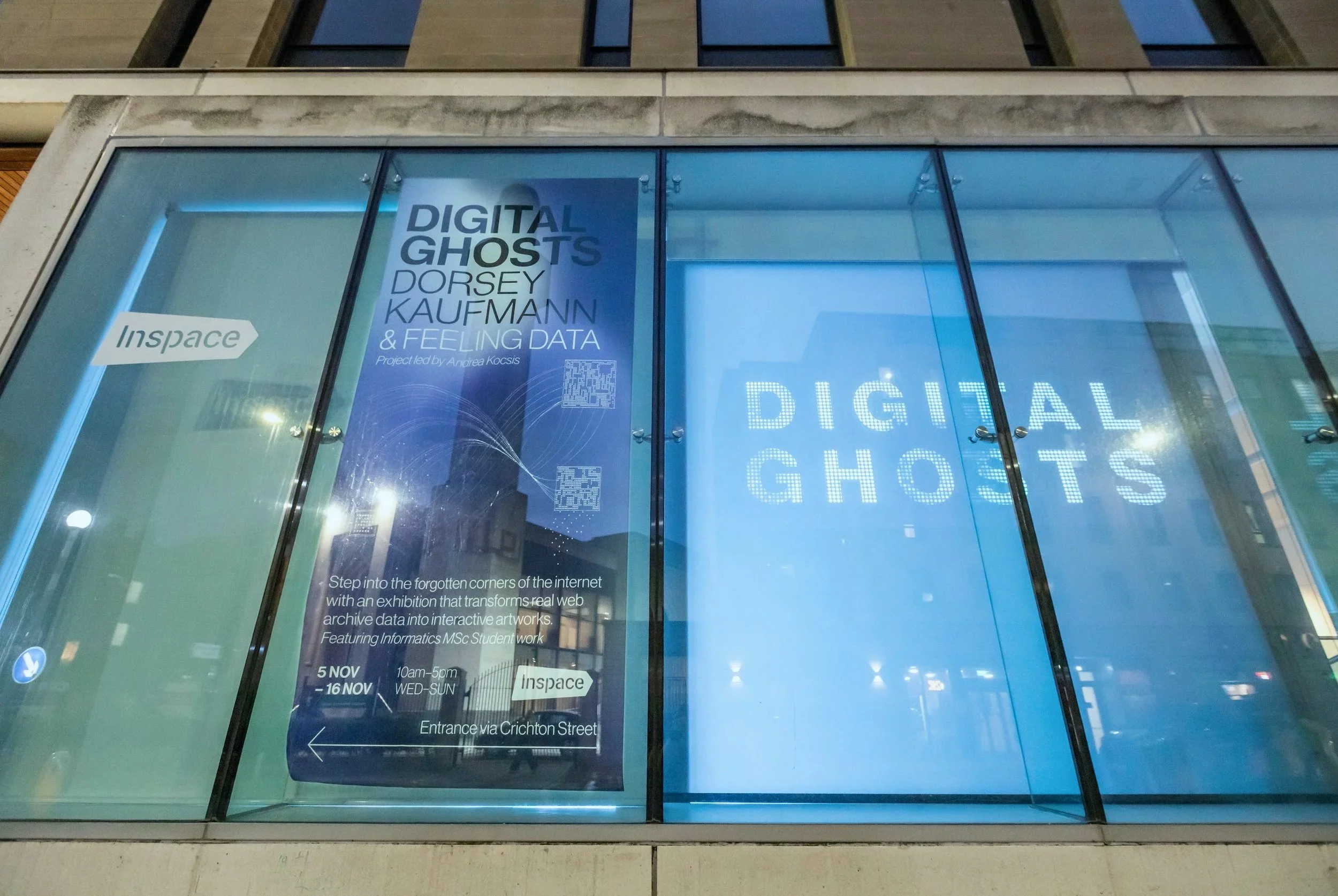
Digital Ghosts
MULTIMEDIA INSTALLATION | 2025 - 2026
Winner of the Center for Data, Culture, and Society’s Digital Research Prize for Best Data Visualization and Best Data-Driven Project
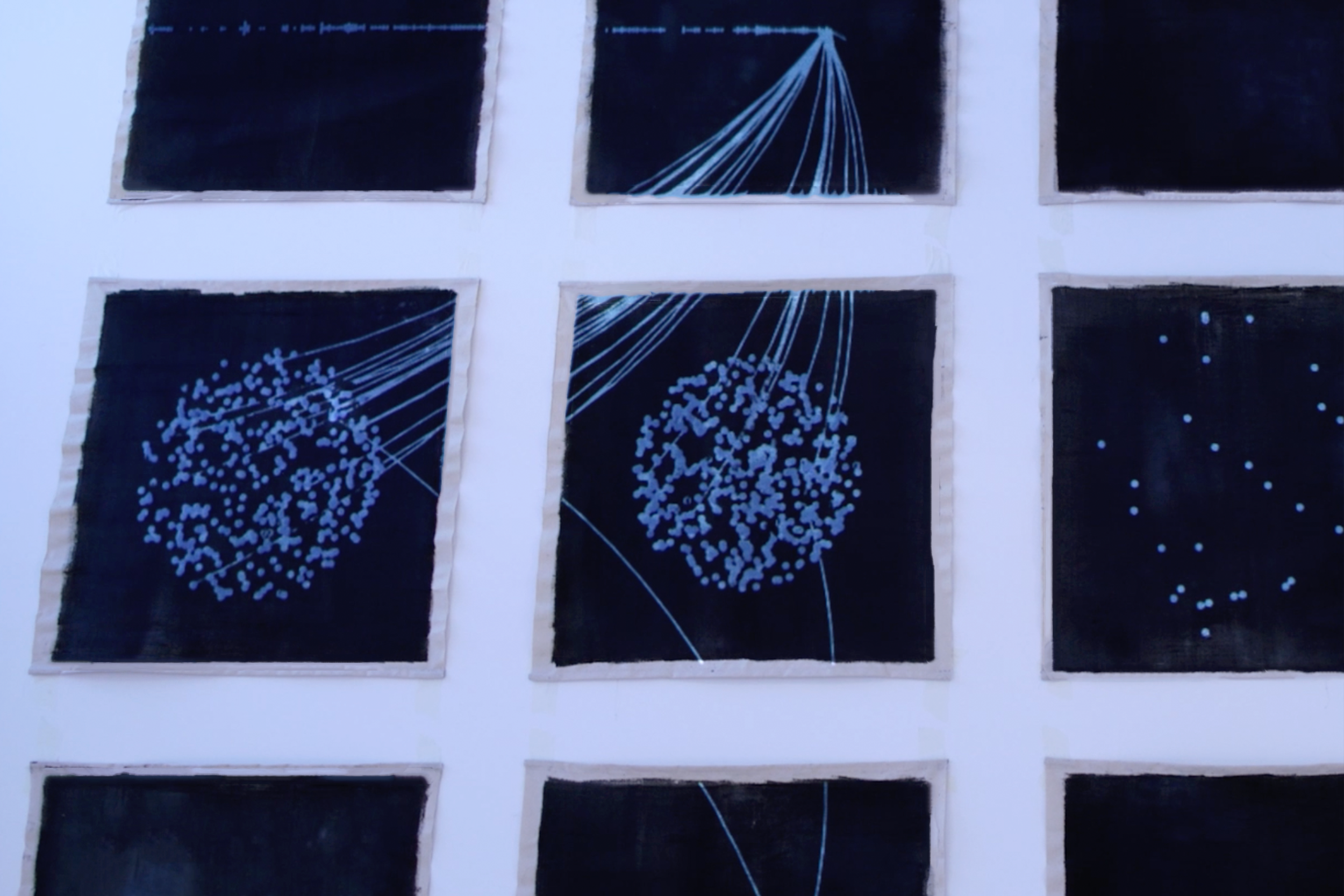
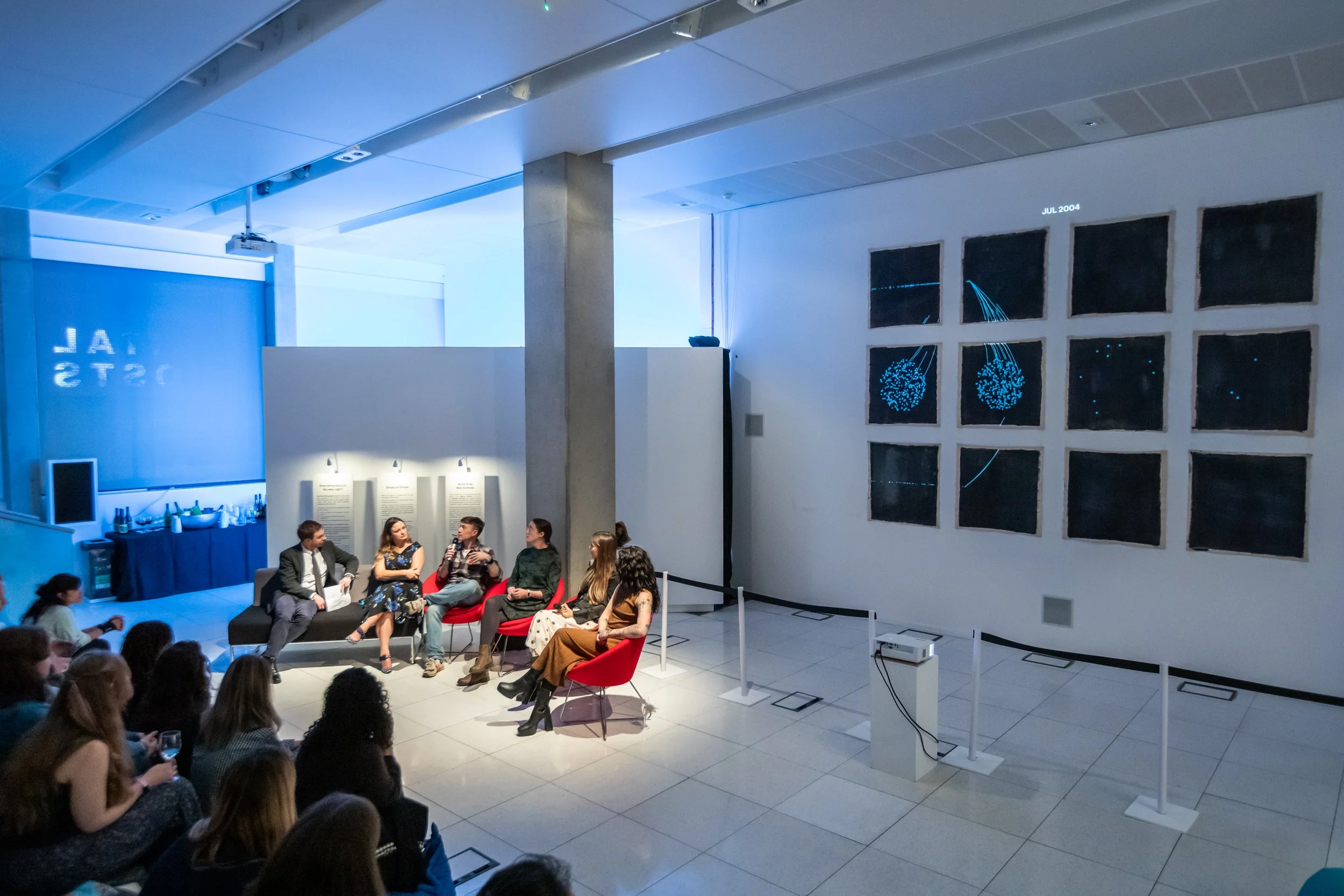
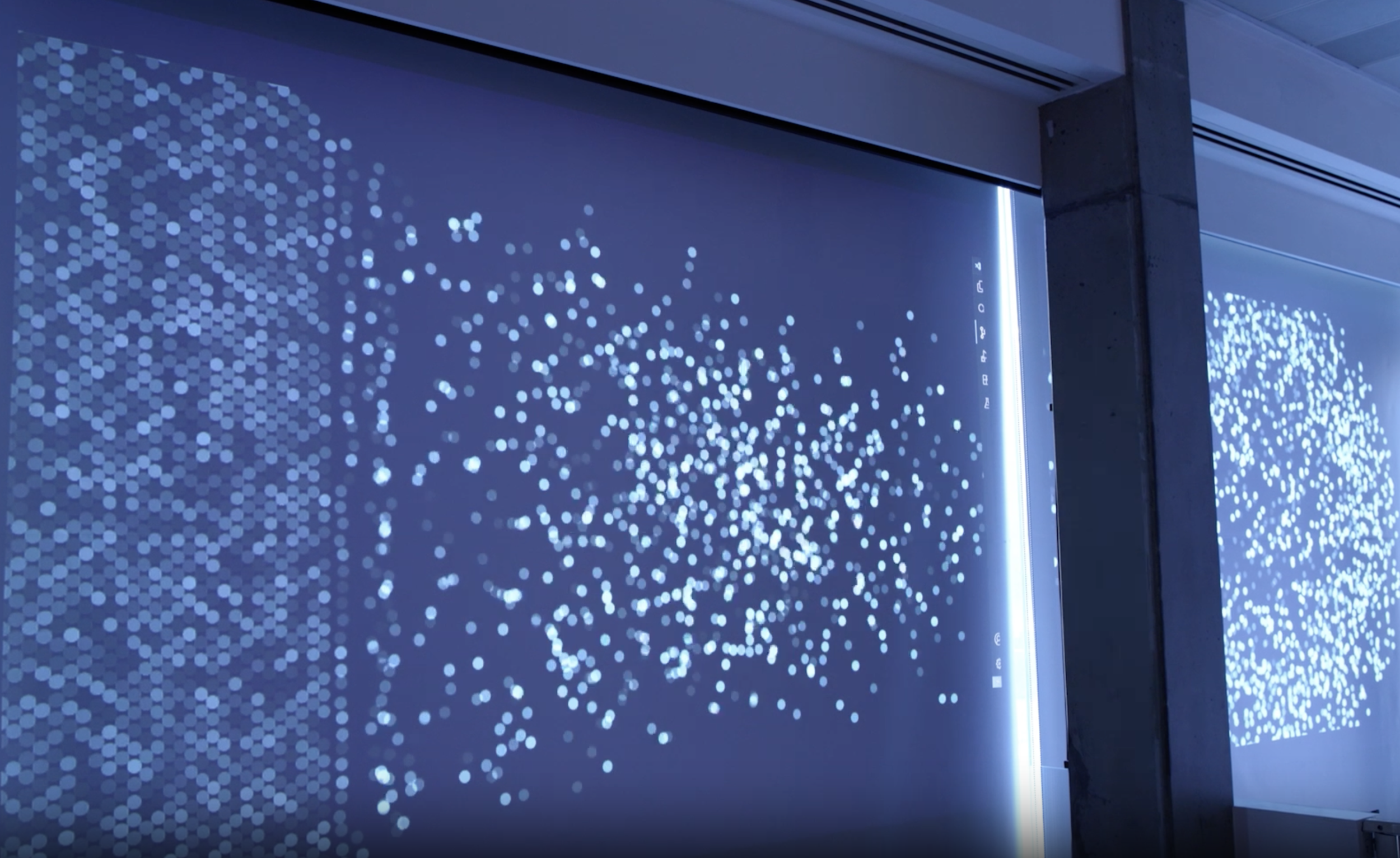
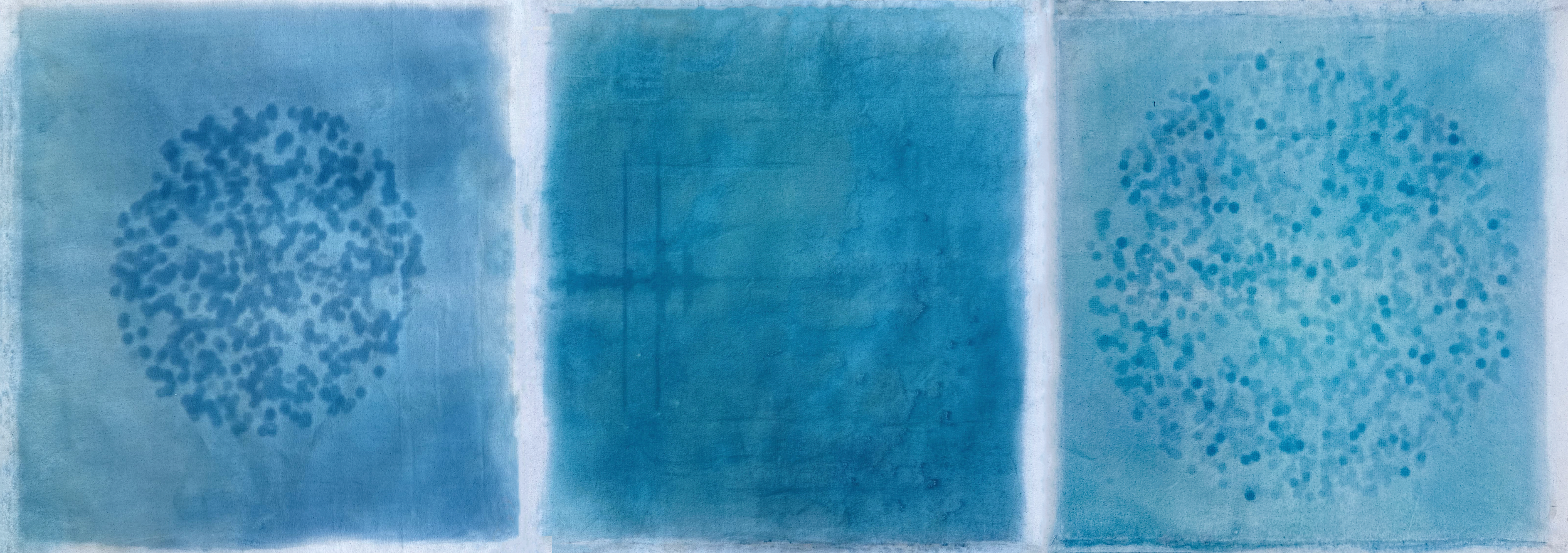
This durational cyanotype installation translates the ebb and flow of digital traces into a slow photographic exposure. Web archive records become paths of light that animate the life and death of websites, using light as both medium and metaphor for online memory. As the projection plays across a grid of cyanotypes, long-lived sites leave vivid marks while short-lived ones fade into ghost-like traces. Over five days, the UV exposure develops each canvas into a unique artefact shaped by chance, environment, and entropy, revealing cycles of presence and erasure.
In the physical world, traces of people are everywhere: footprints in the sand, faded chalk marks on the sidewalk, or broken twigs marking a new path through the forest. Whether intentional or not, our interactions with the environment become part of it.
Digital traces, however, are a different story. Despite their ubiquity, they remain difficult to detect.
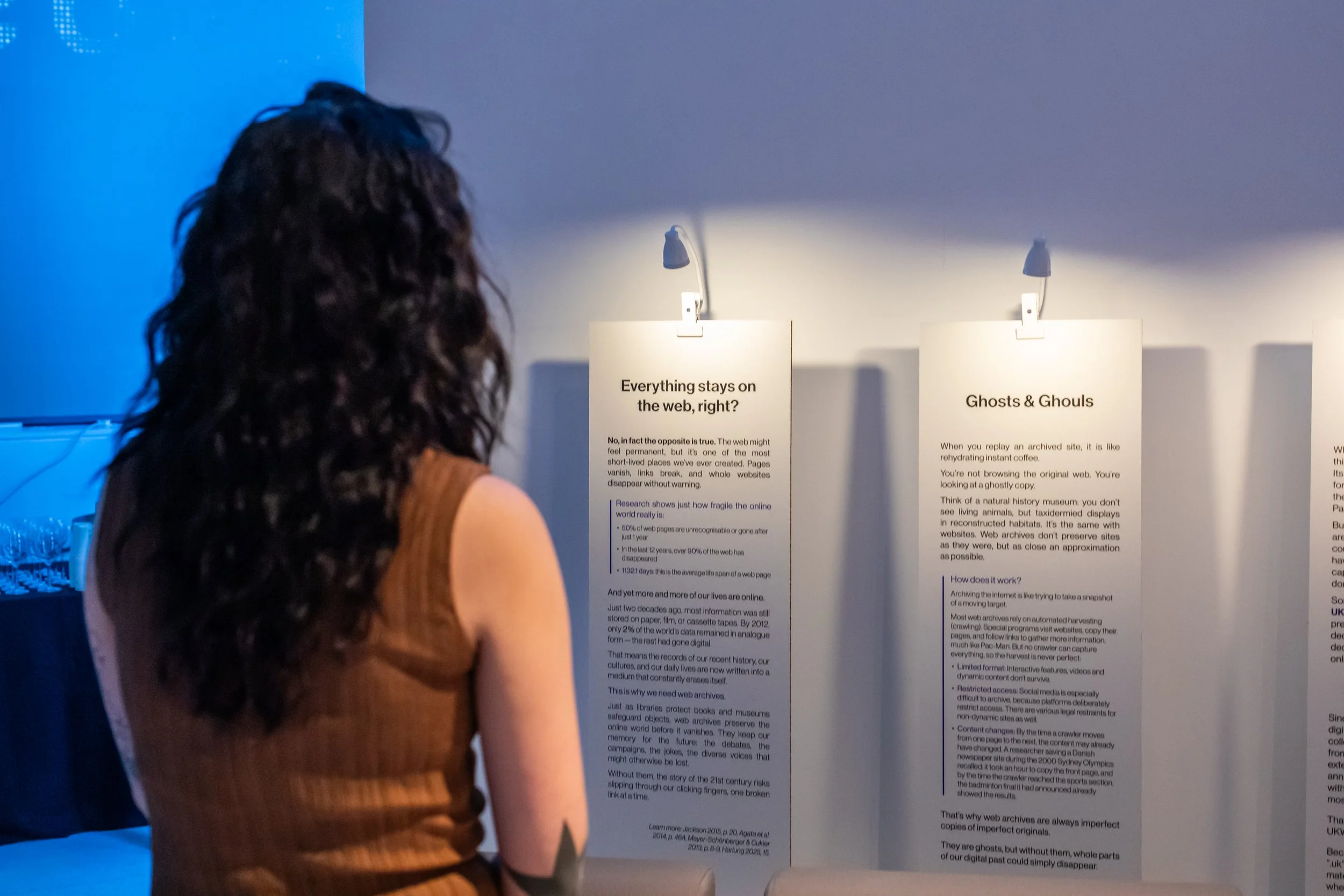
Websites are constantly created, modified, and abandoned, often without leaving a record behind. Unlike linear historical documents, they emerge, evolve, and vanish—leaving only fragments or shadows of their former existence. Web archives attempt to capture websites through snapshots in time, preserving aspects of our digital heritage for future generations. However, because the internet is inherently dynamic, substantial gaps exist in web archive collections.
Rather than viewing this missingness as an error, this project sought to understood it as a meaningful part of the story, one that calls for visual and interactive strategies that highlight digital loss.
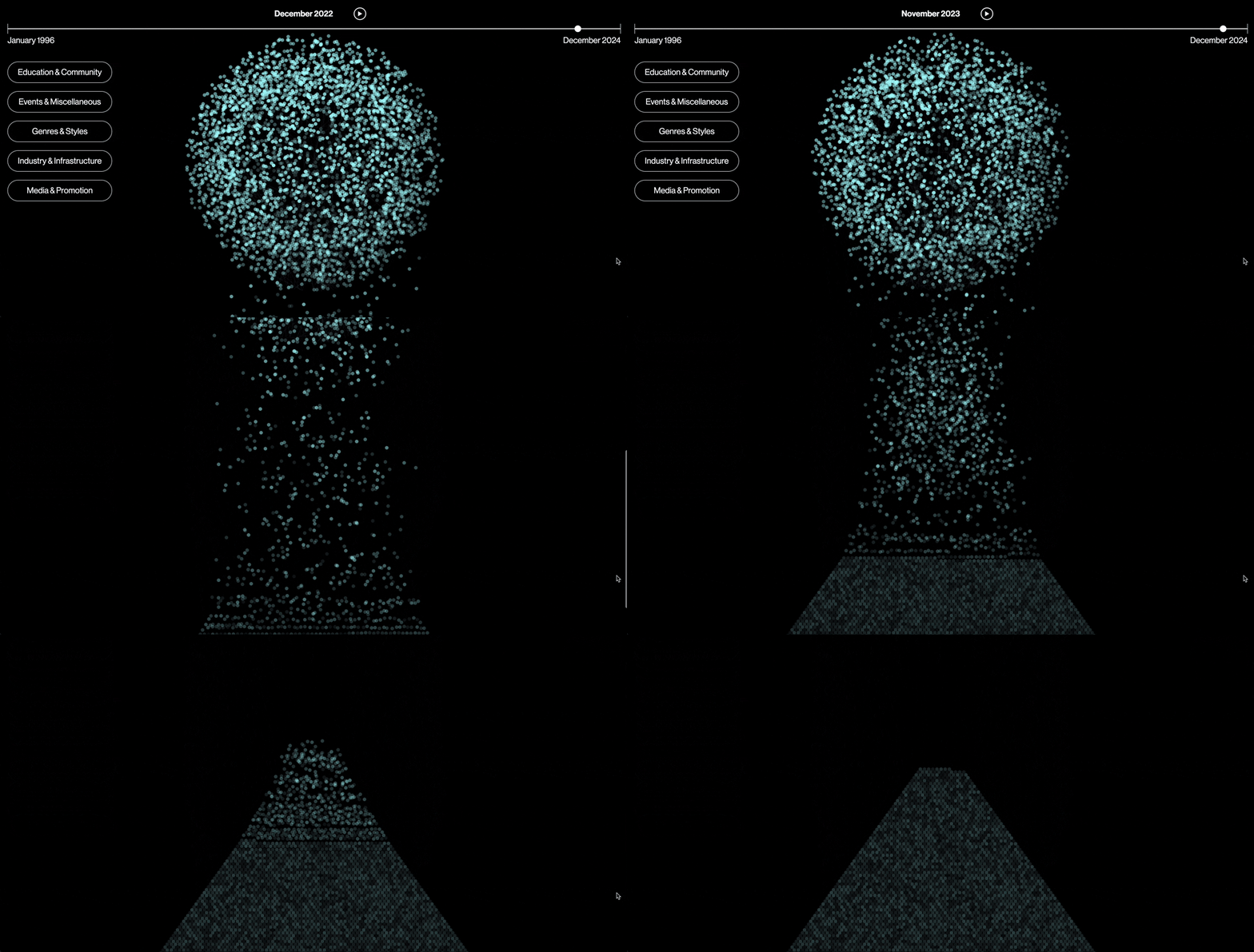
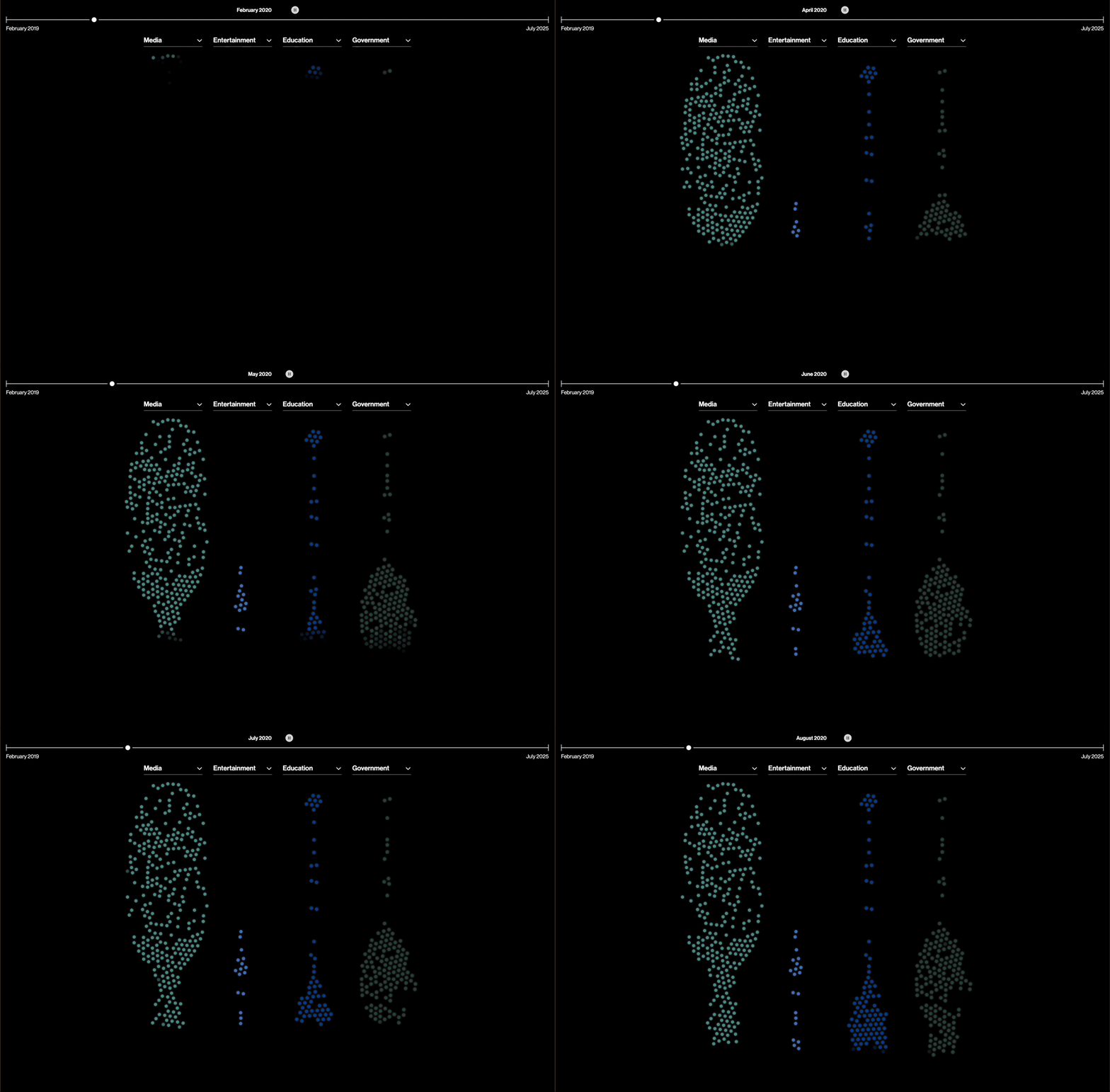
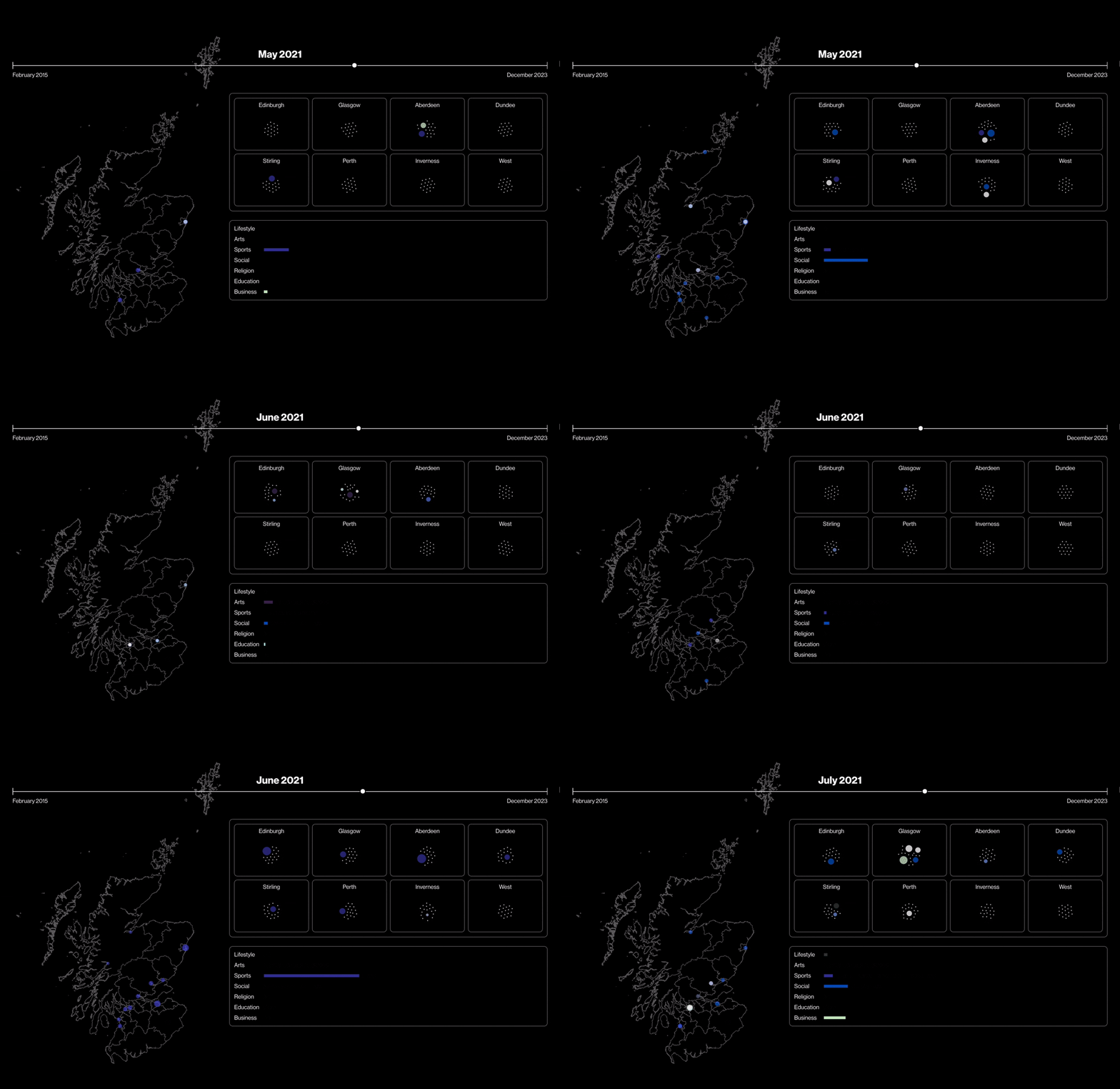
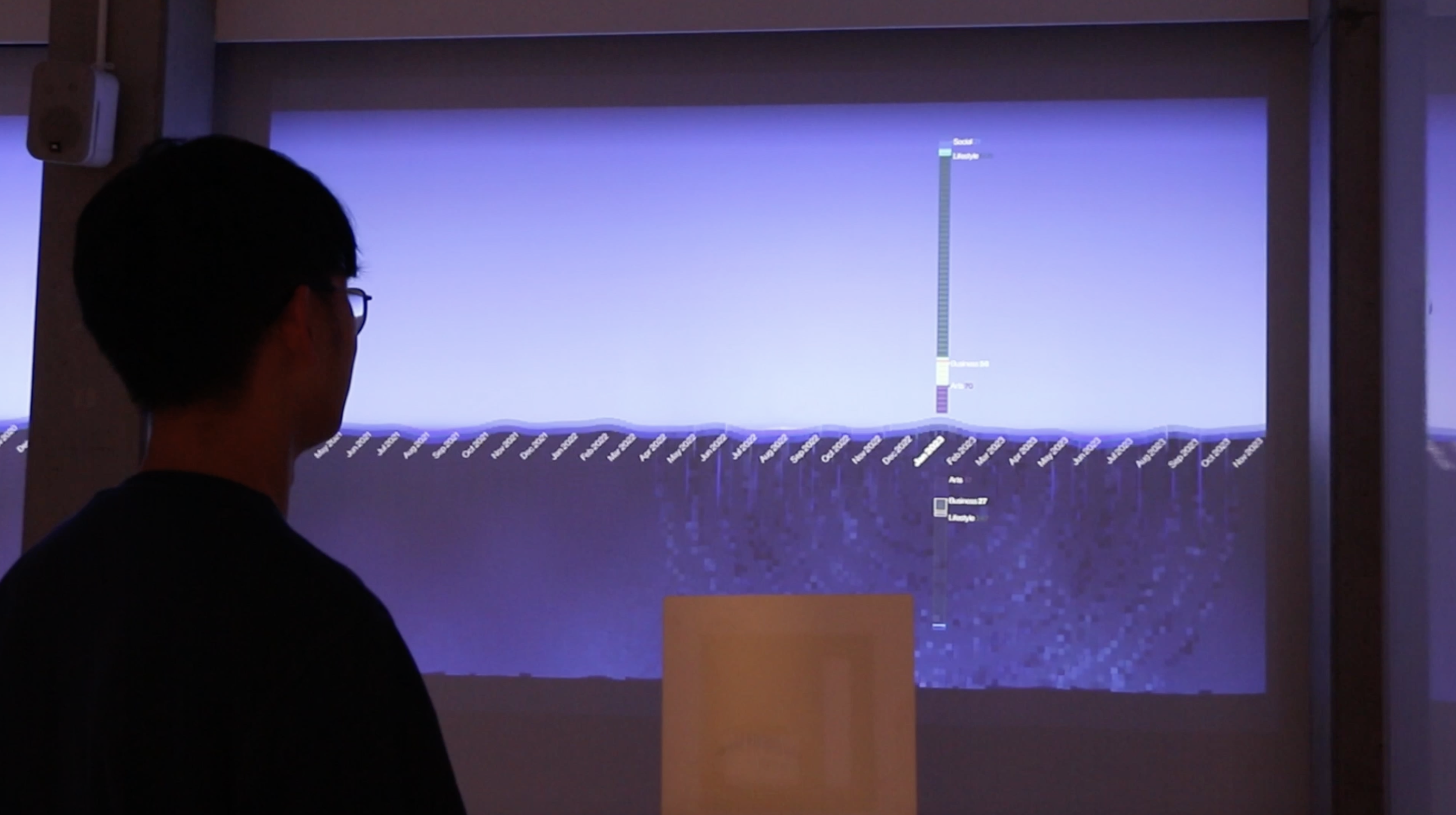
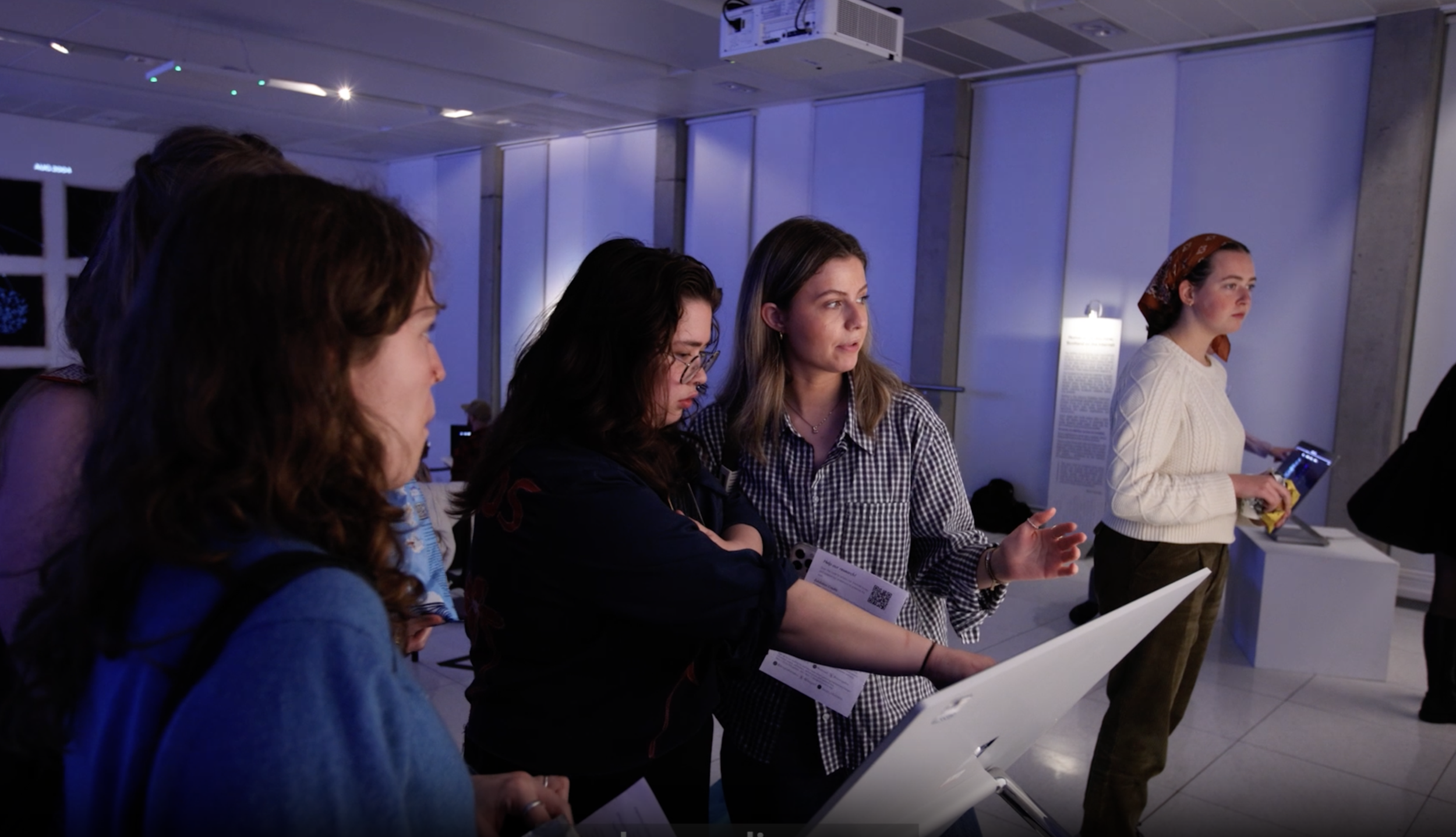
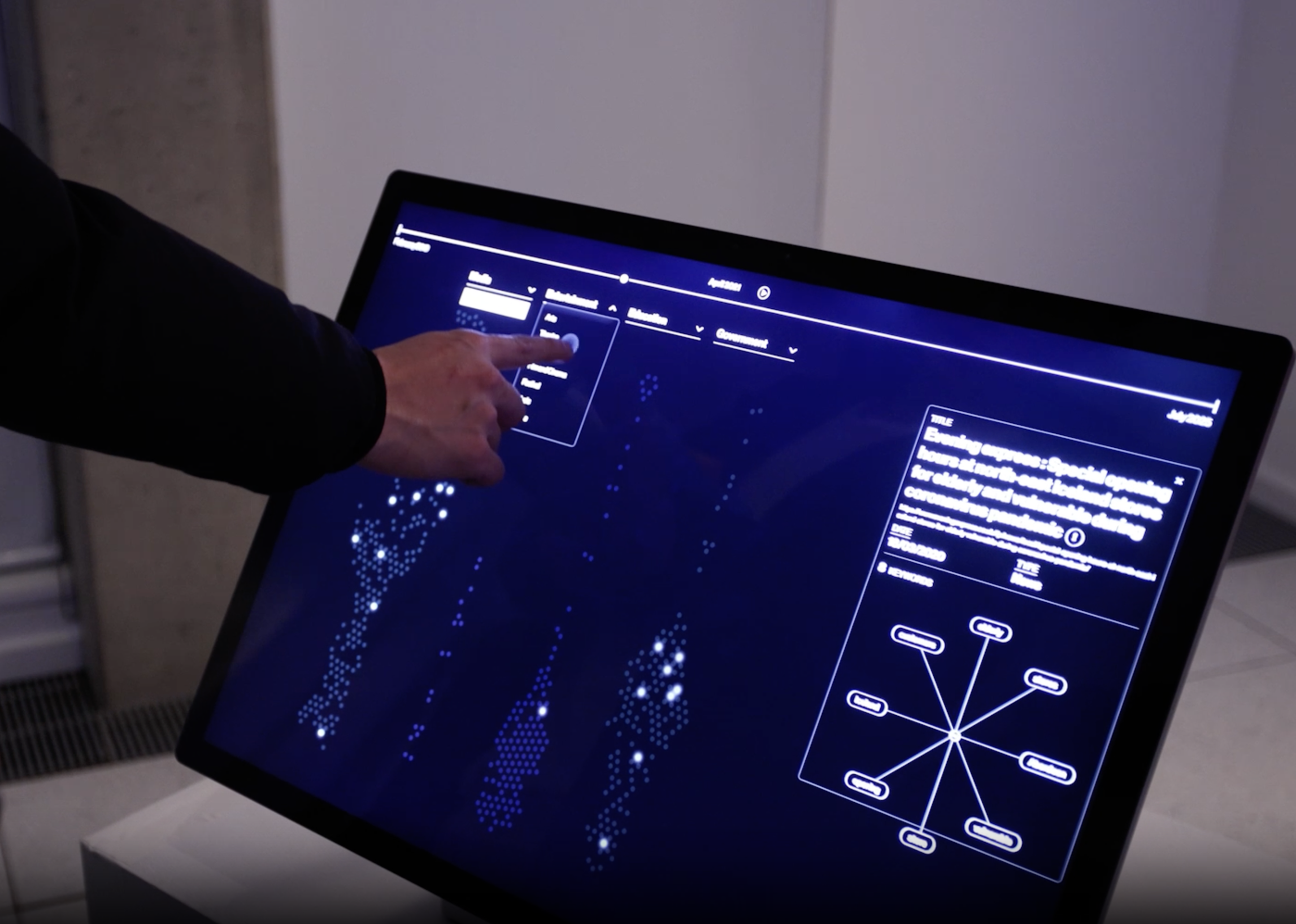
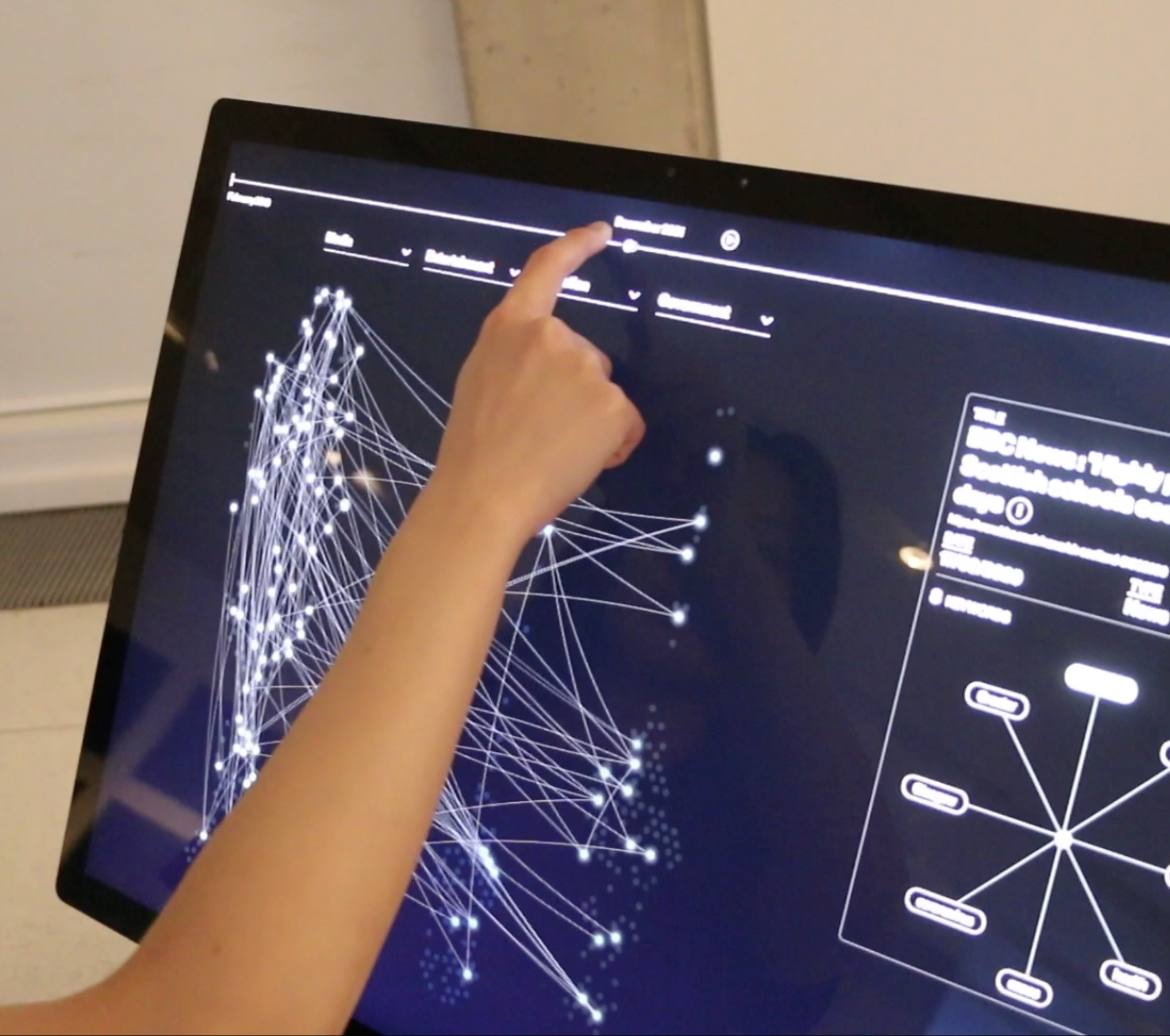
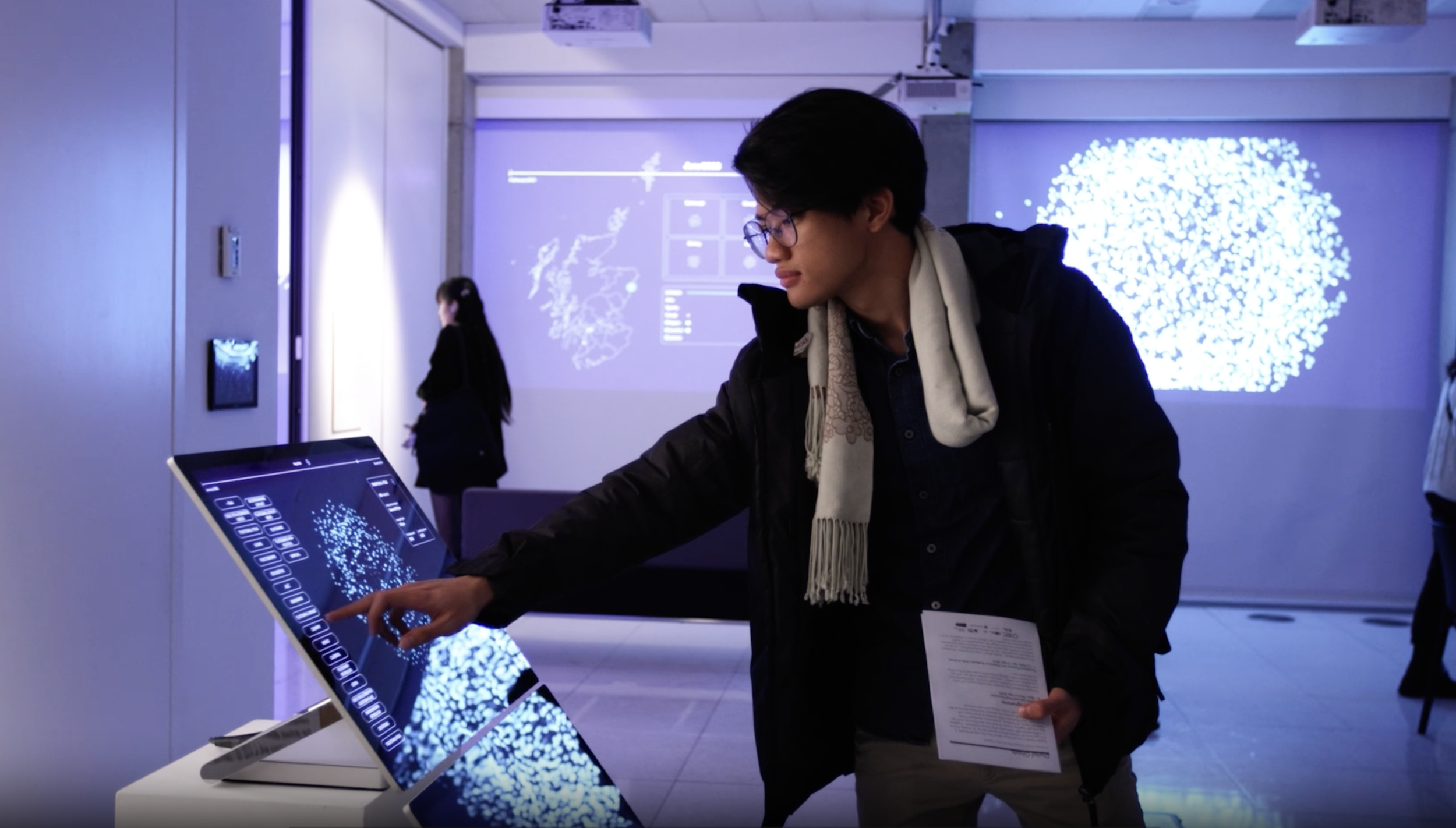
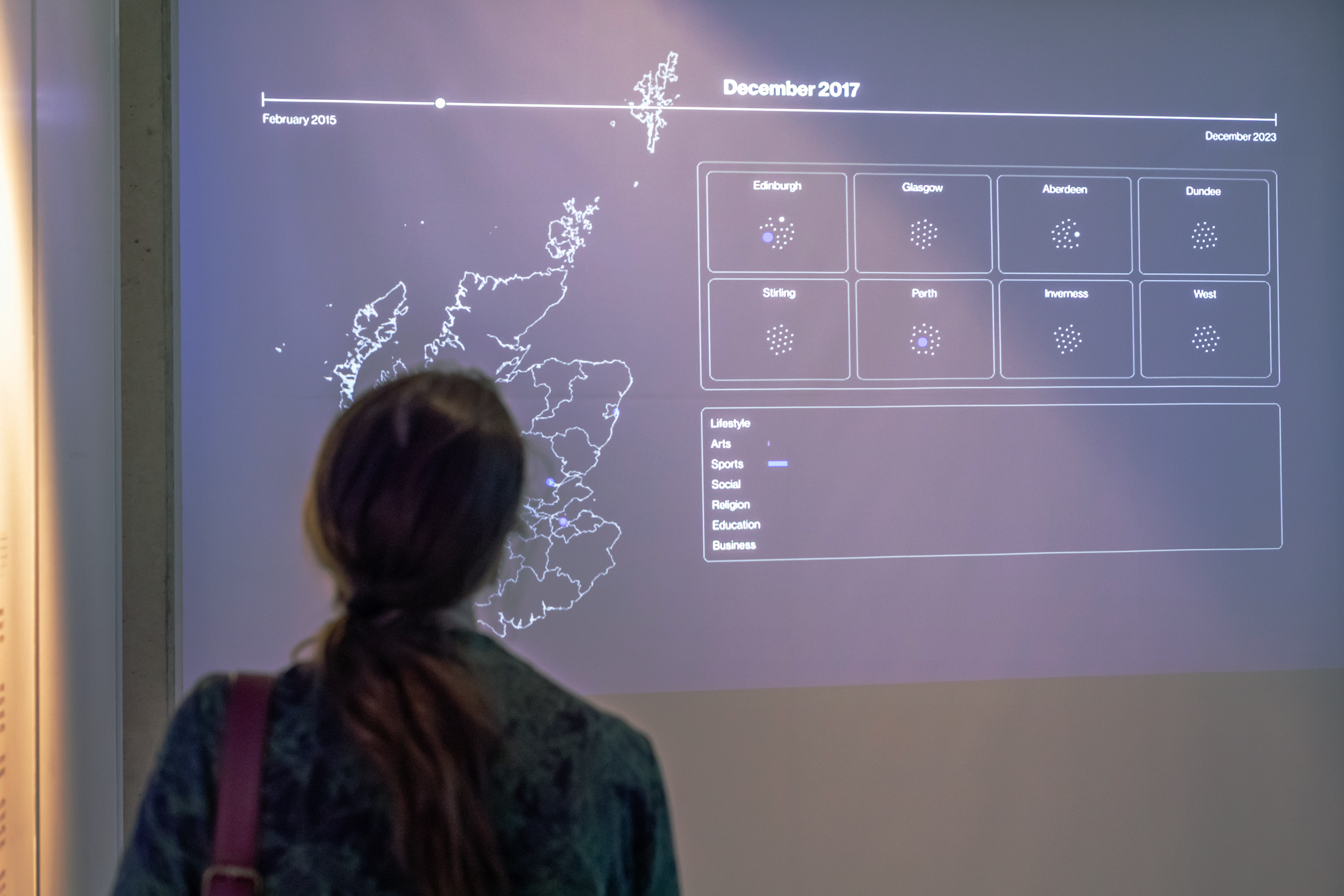
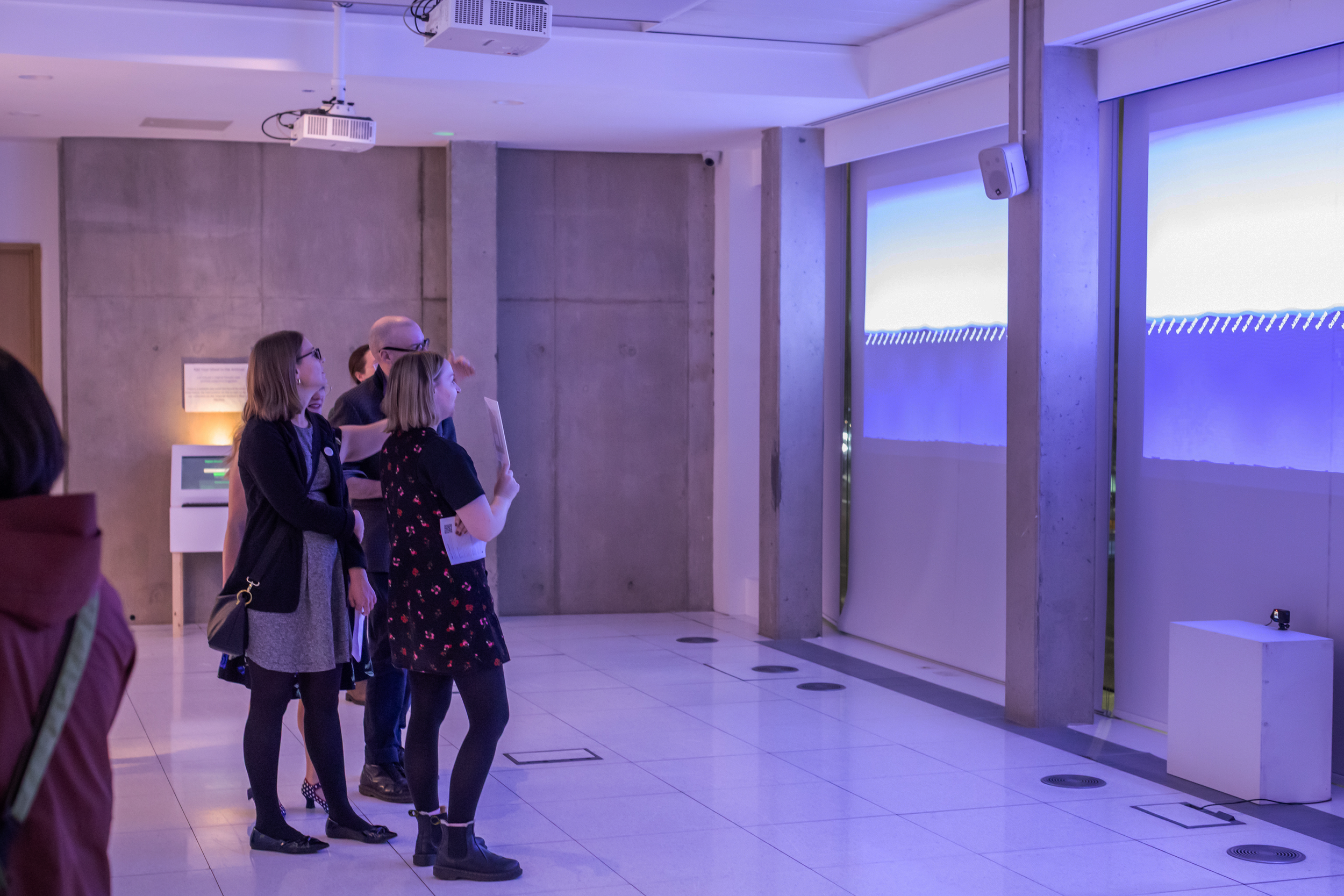
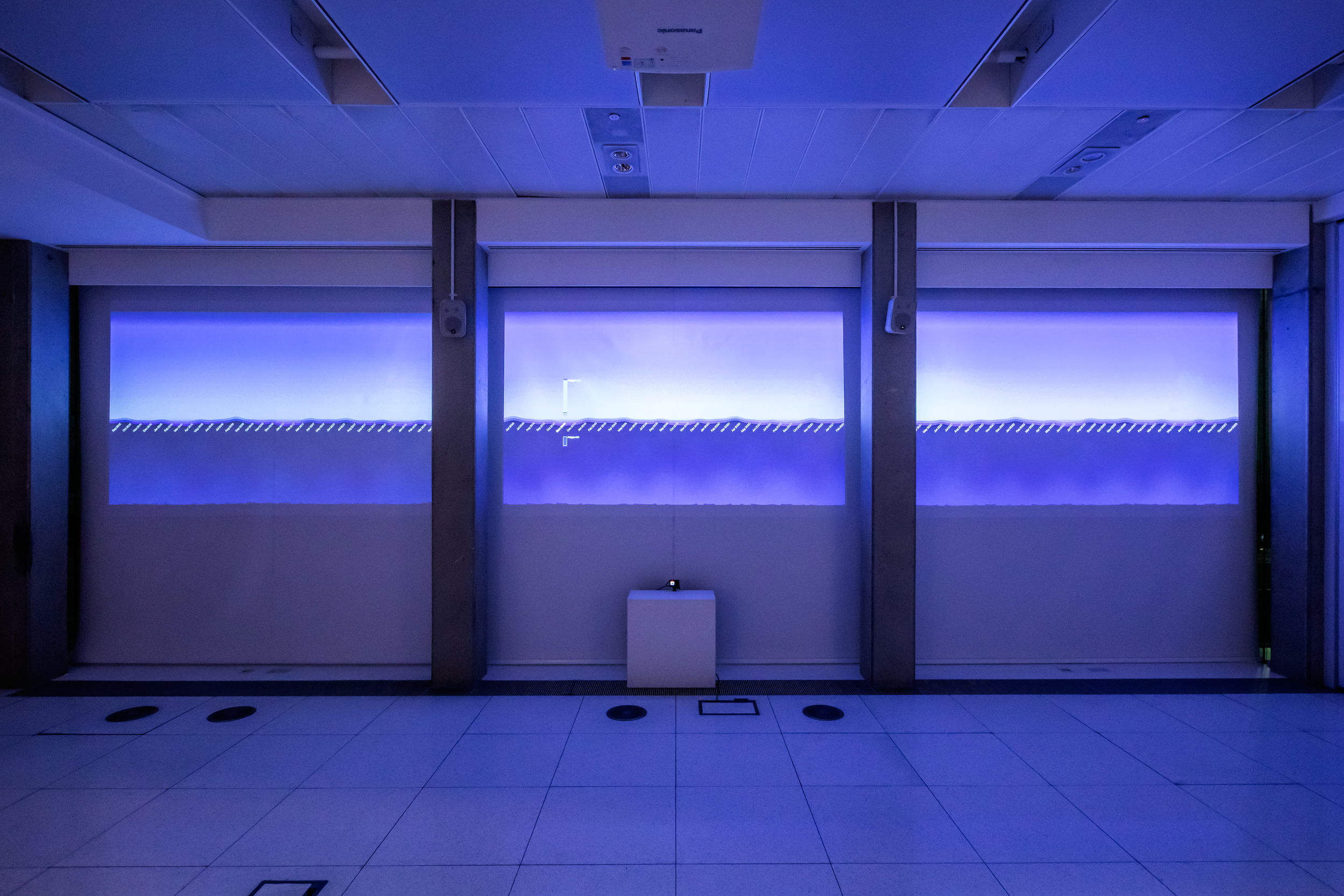
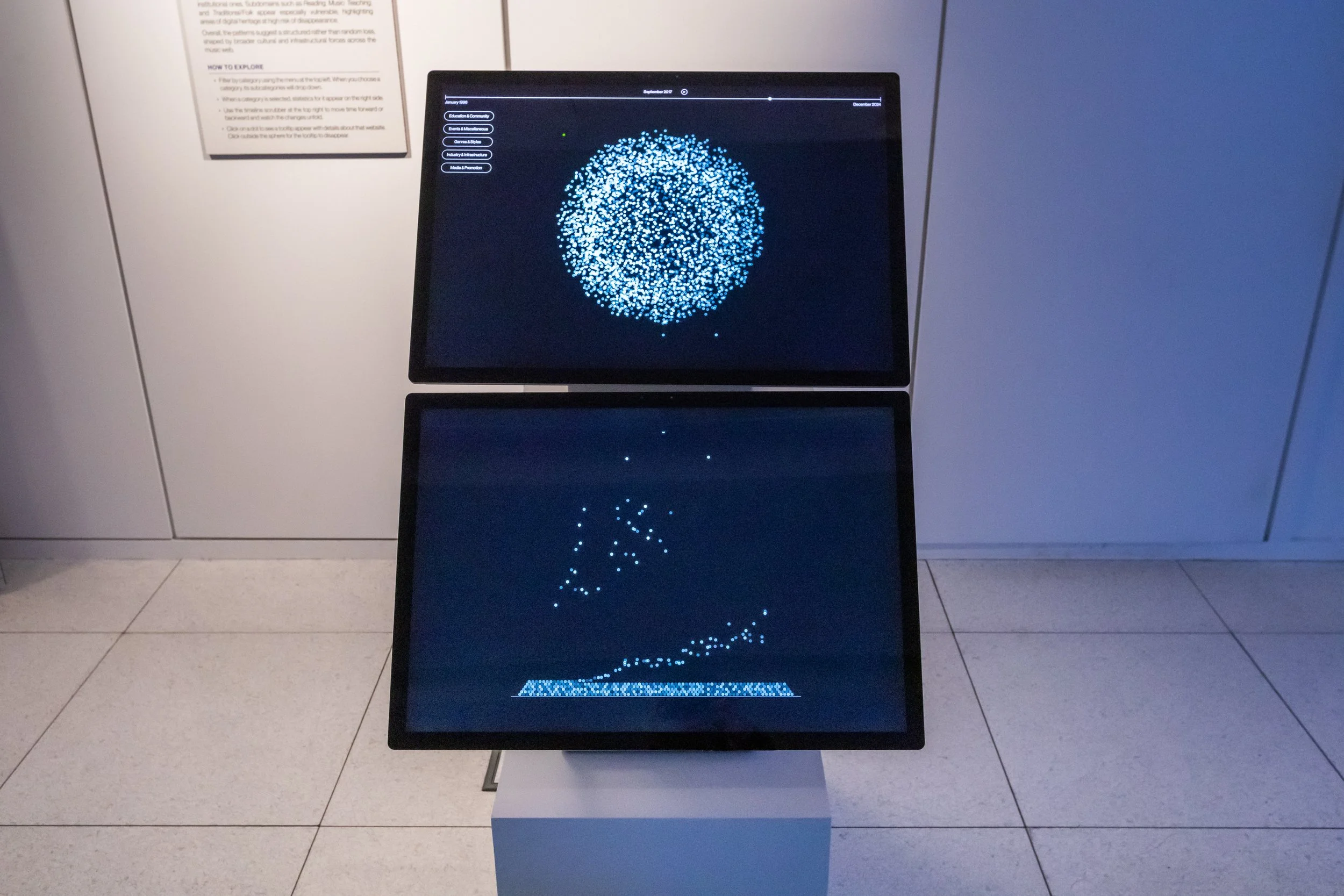
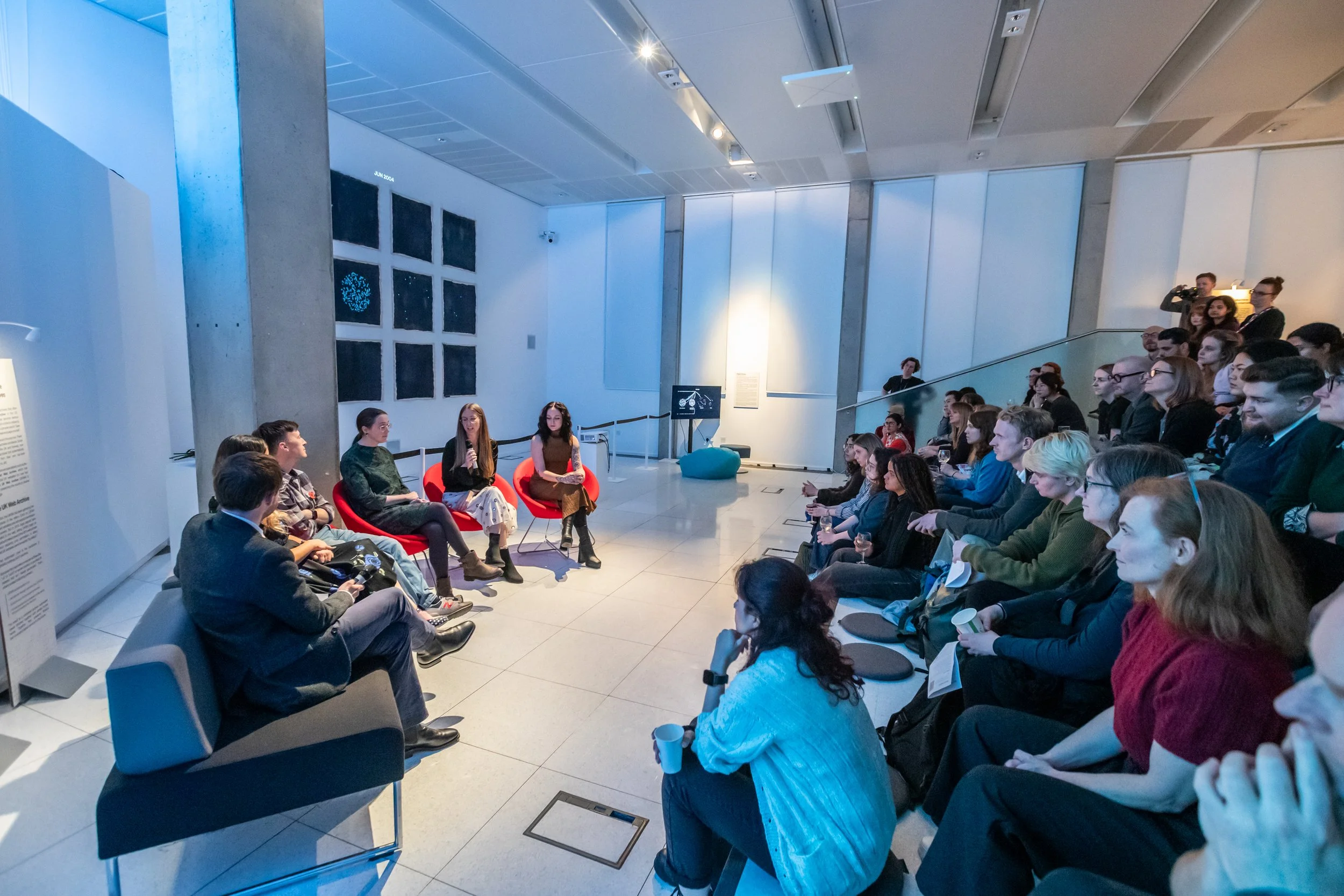
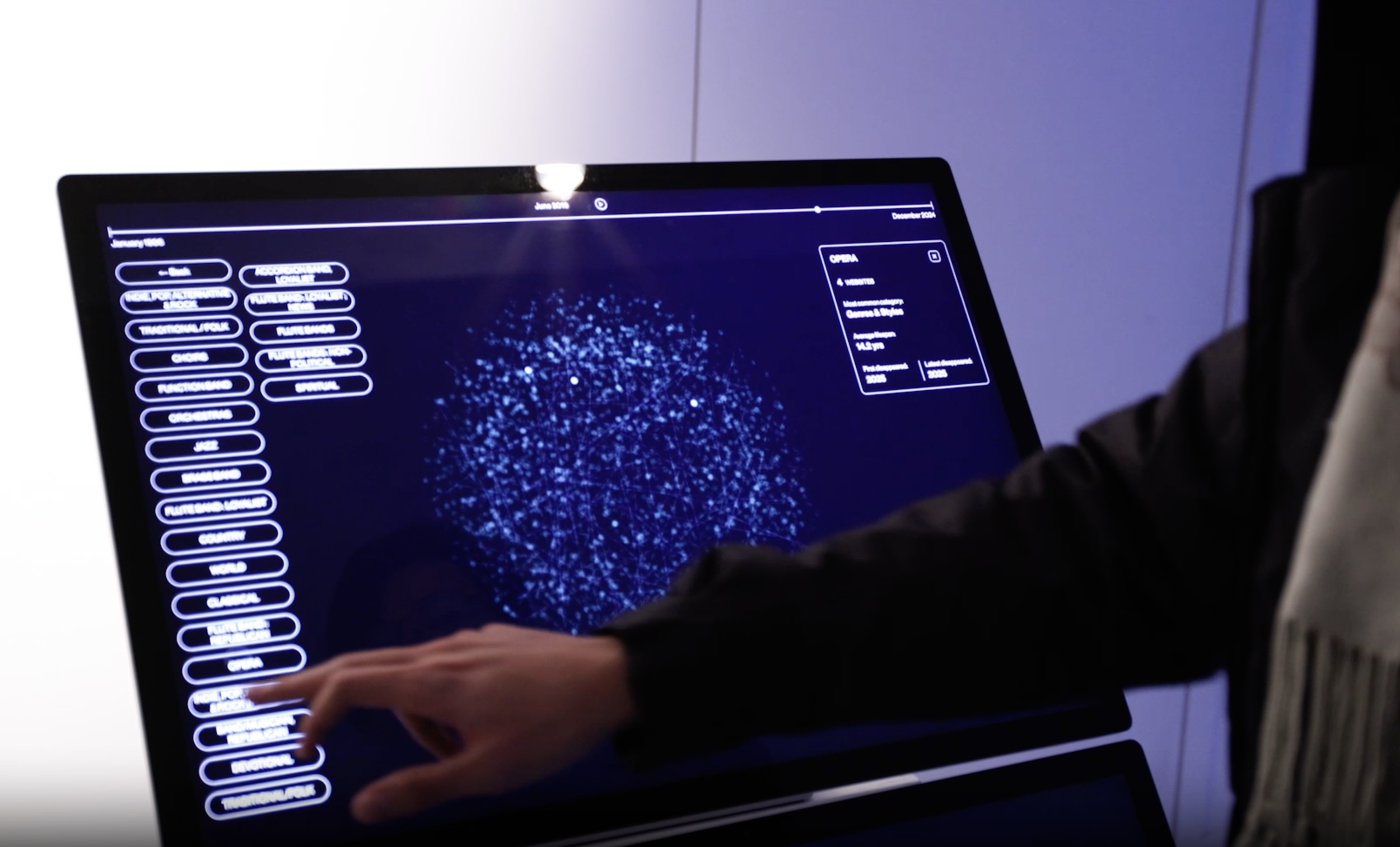
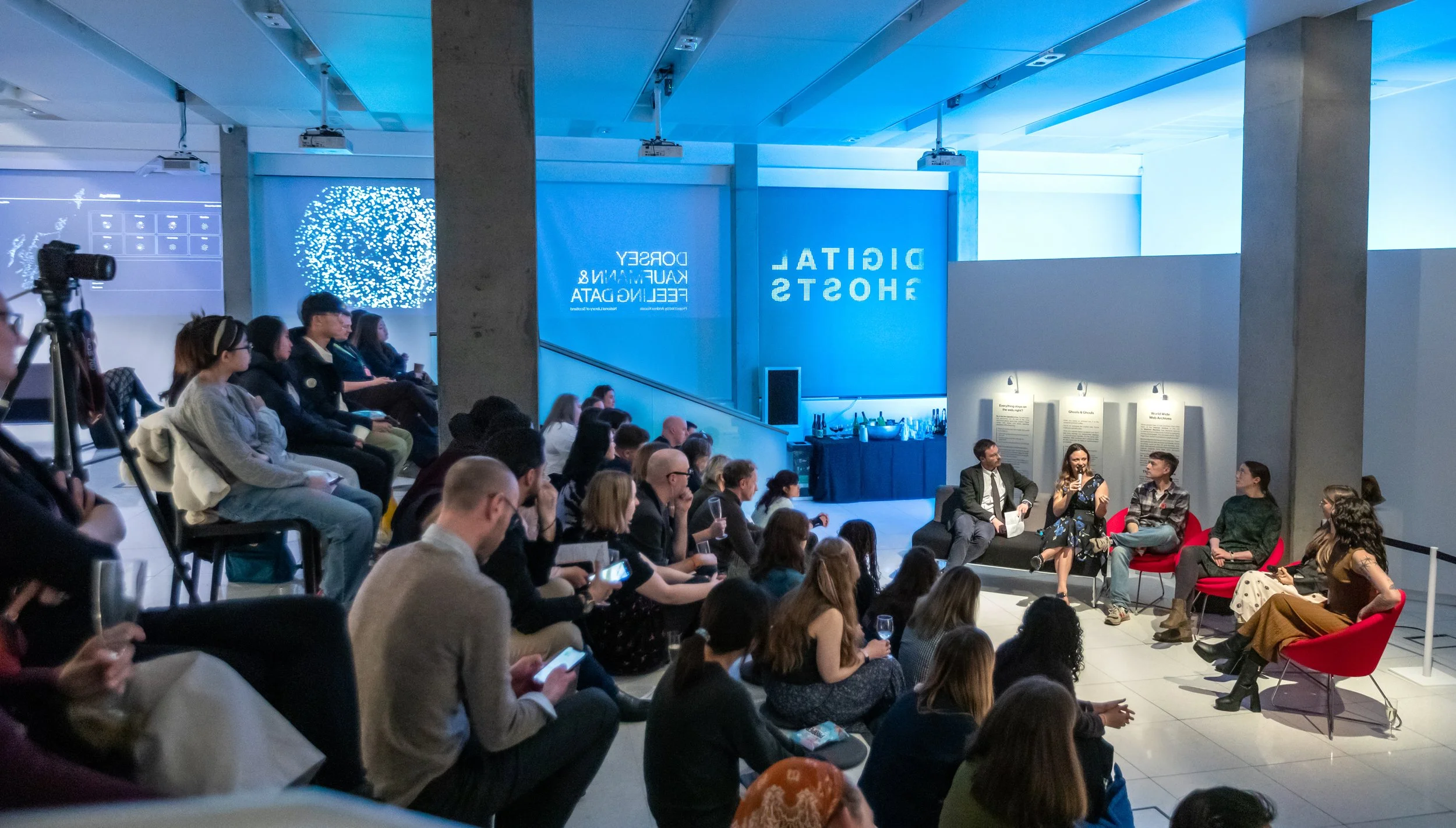
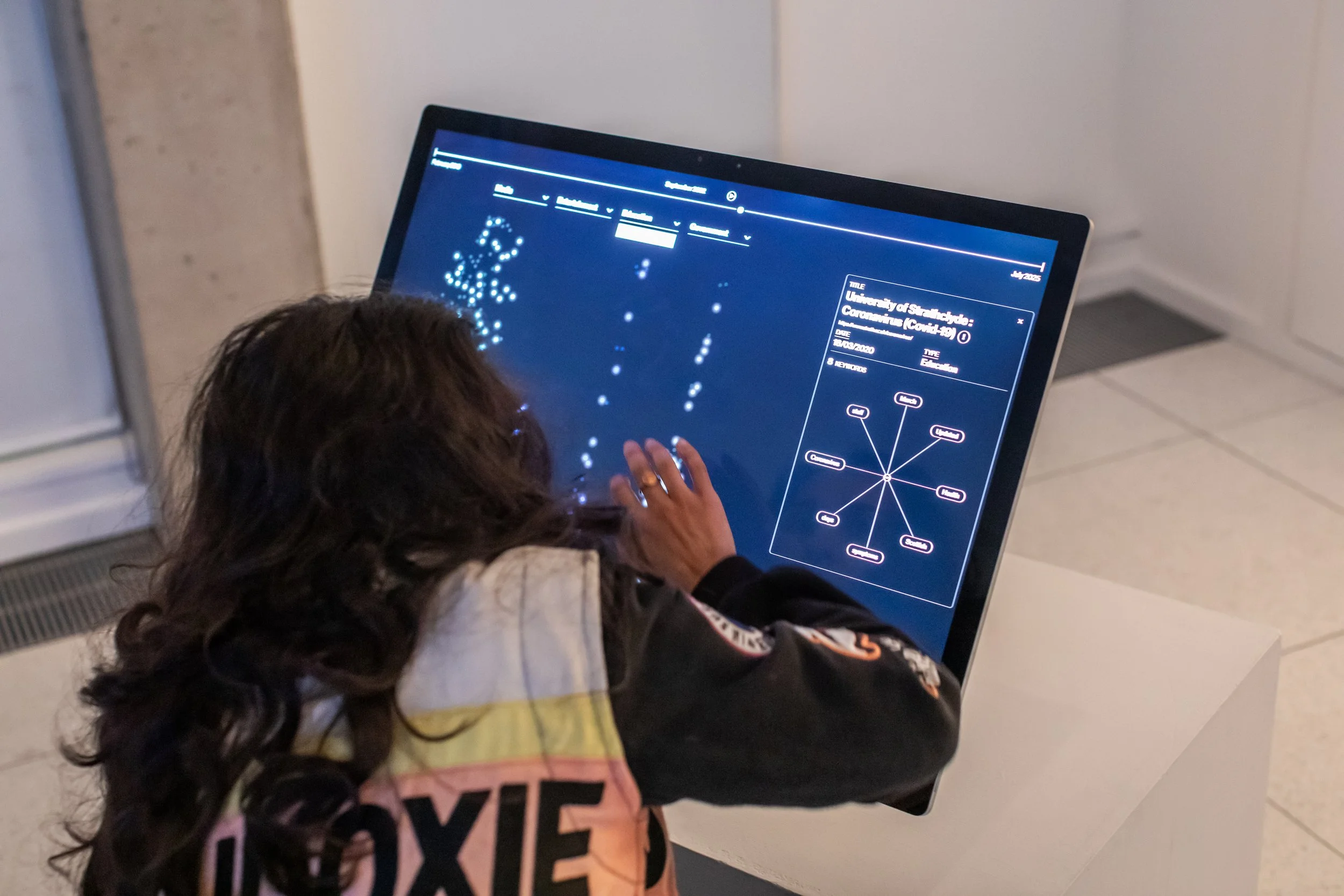
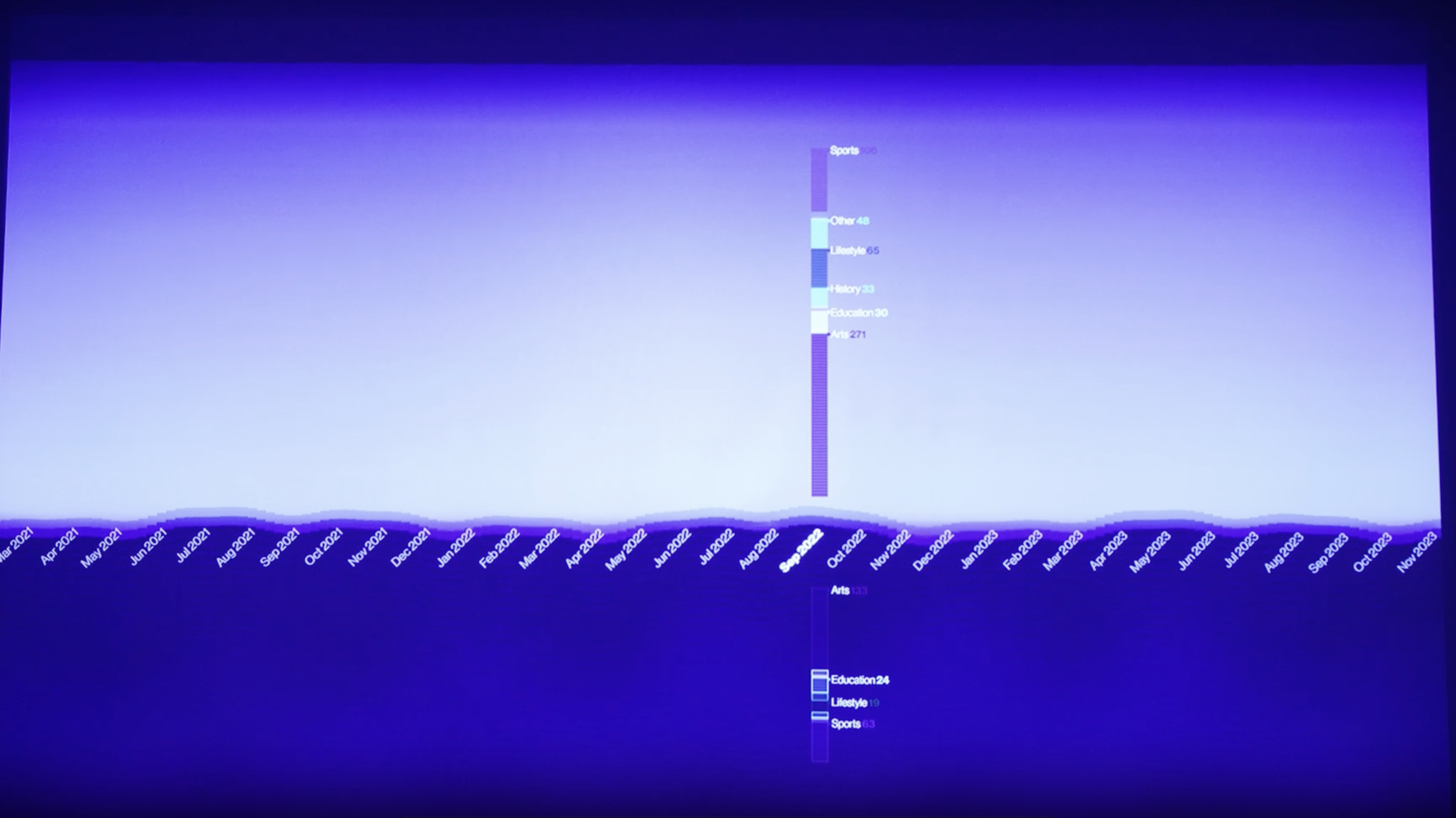
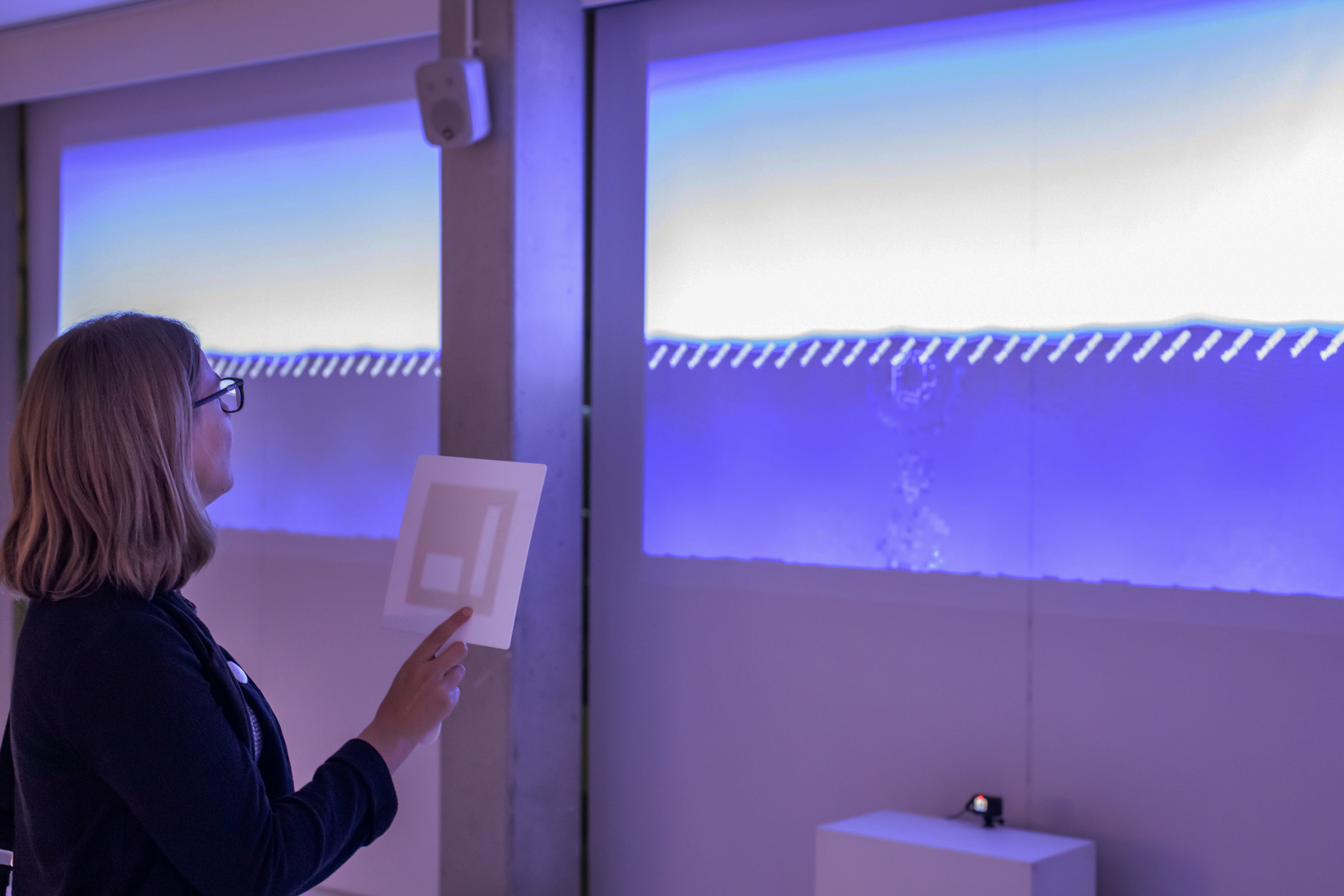
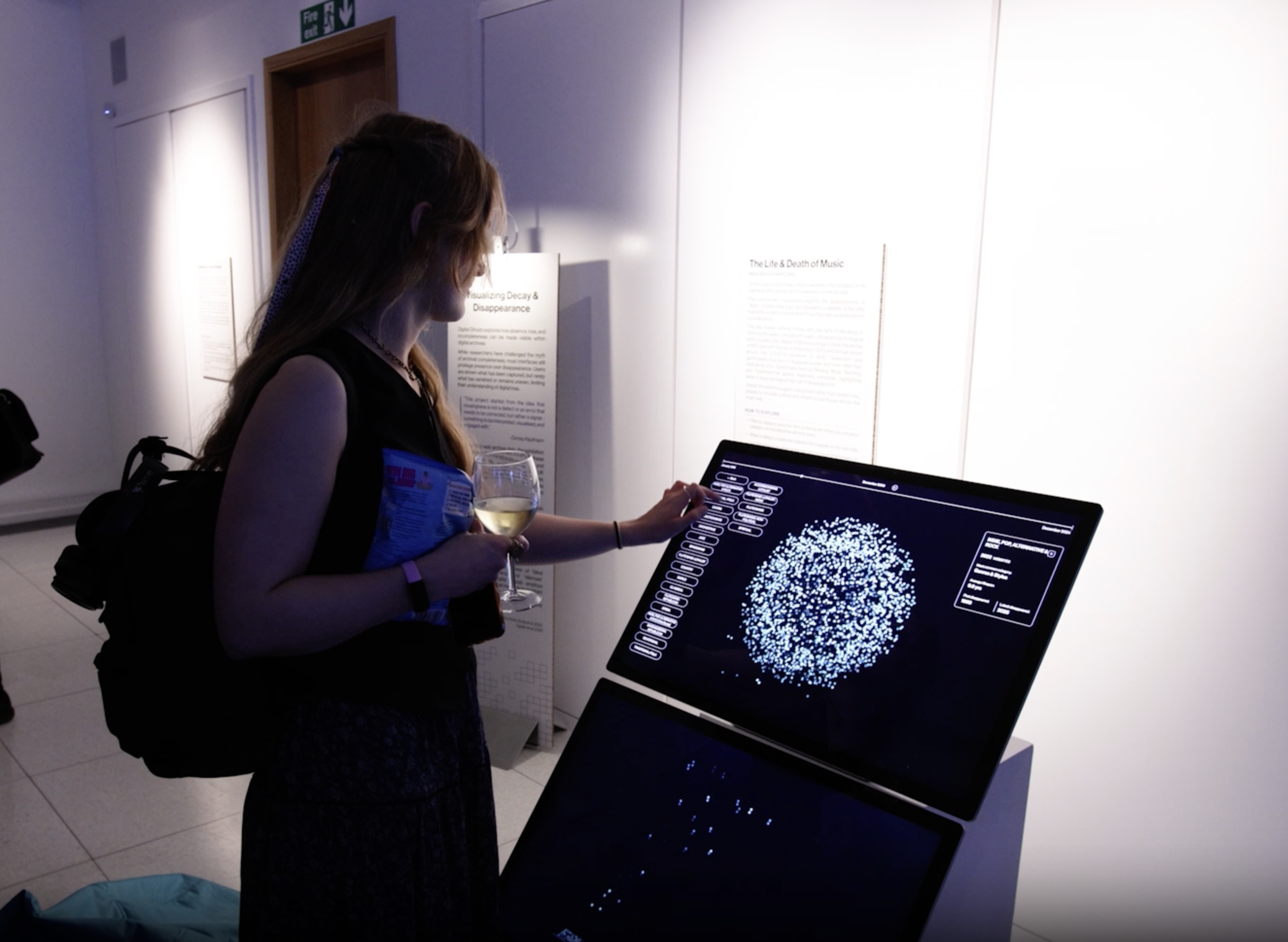
Digital Ghosts turns online memory into something you can see and experience in time. In the exhibition, visitors interact with visualizations that reveal both the traces online activity and the spaces where web content has disappeared or was never archived.
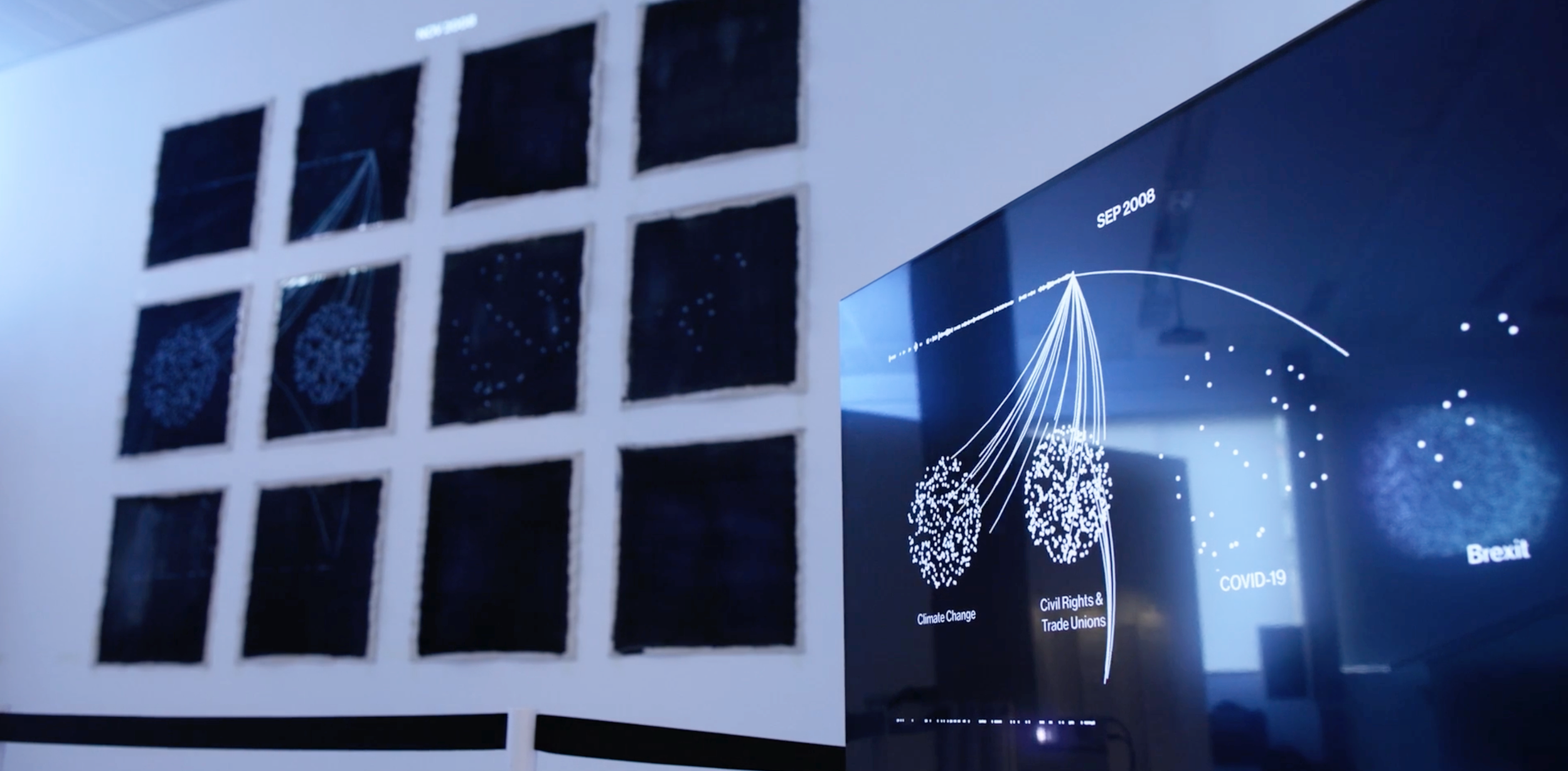
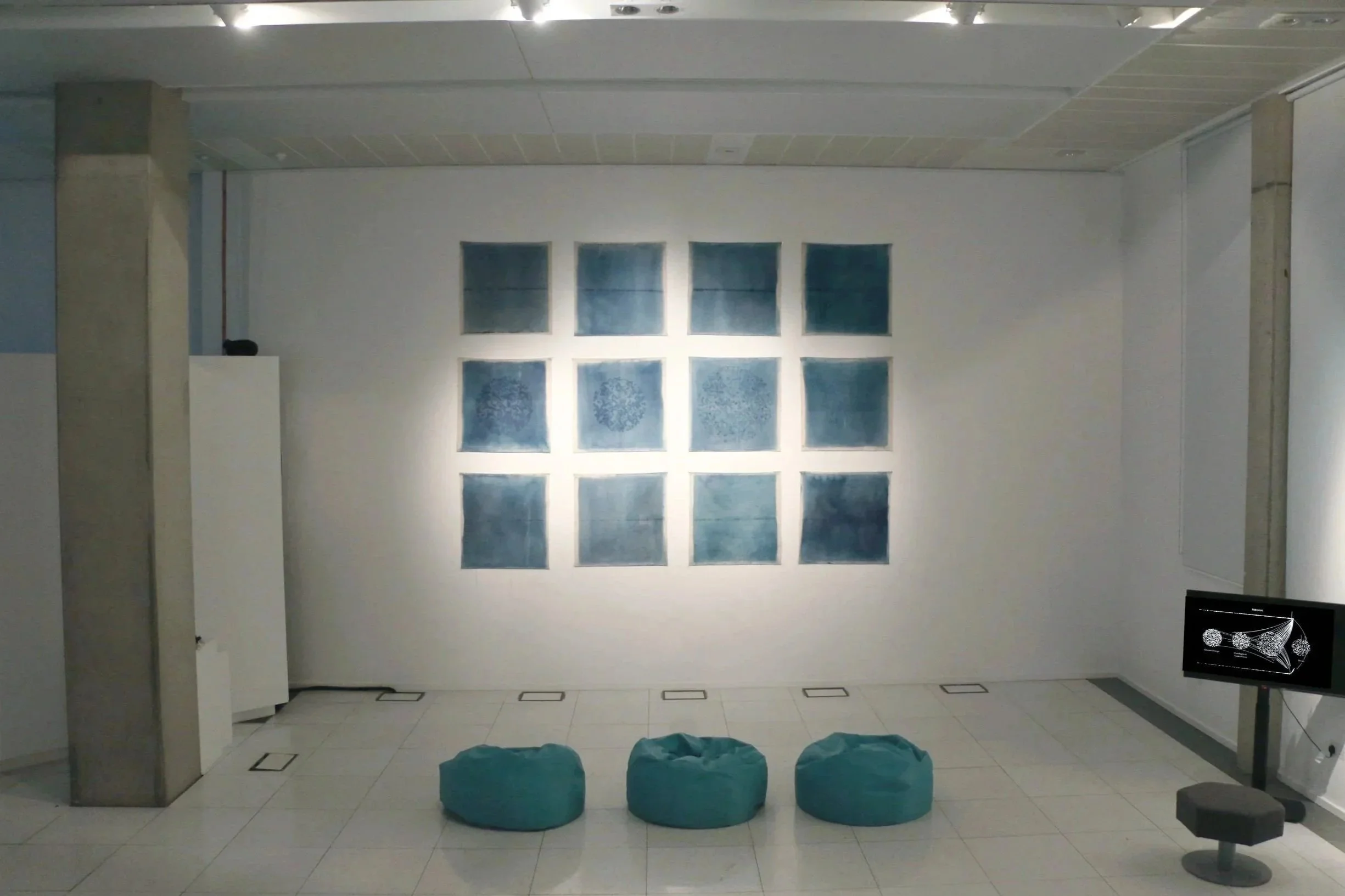
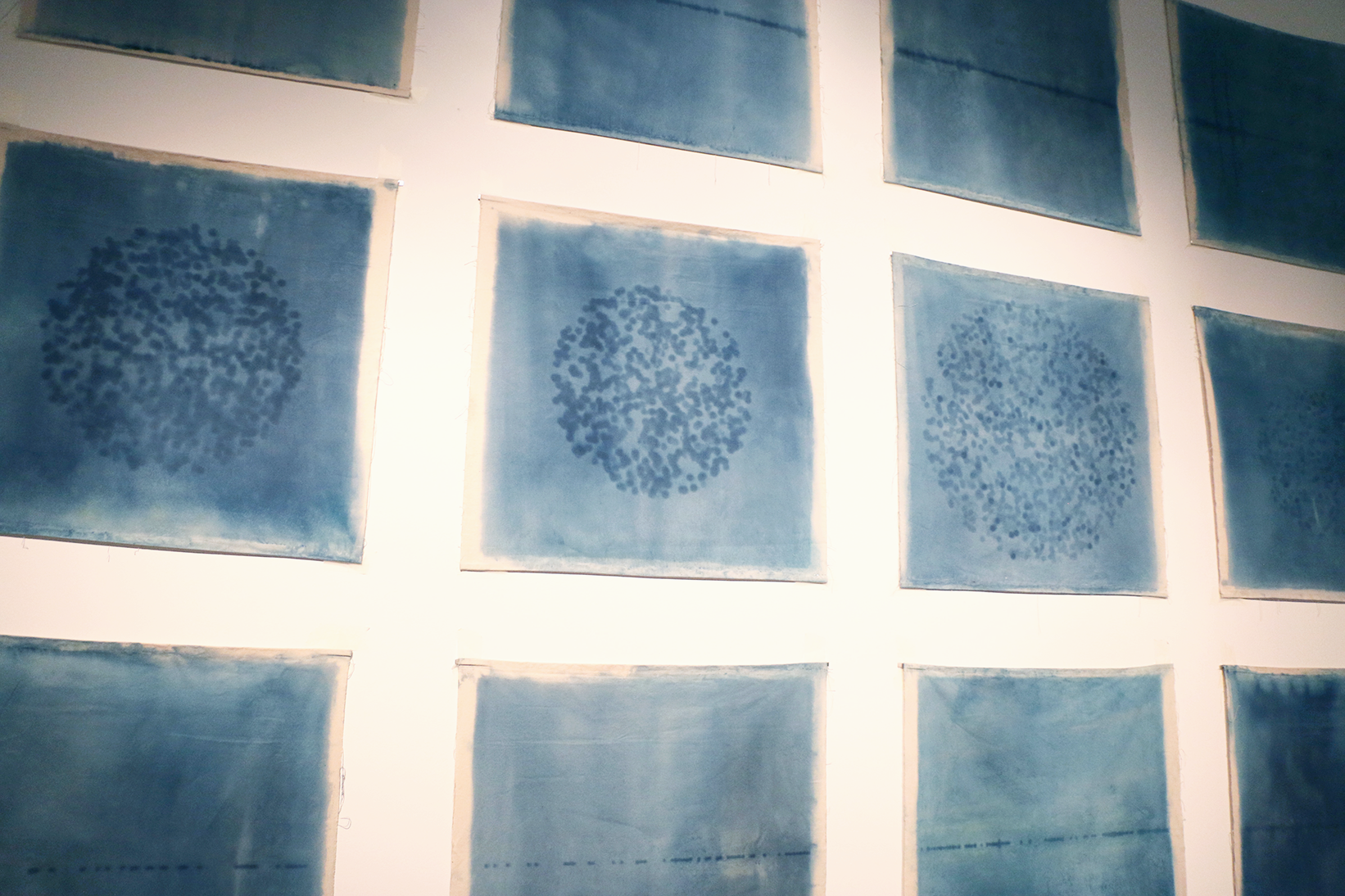
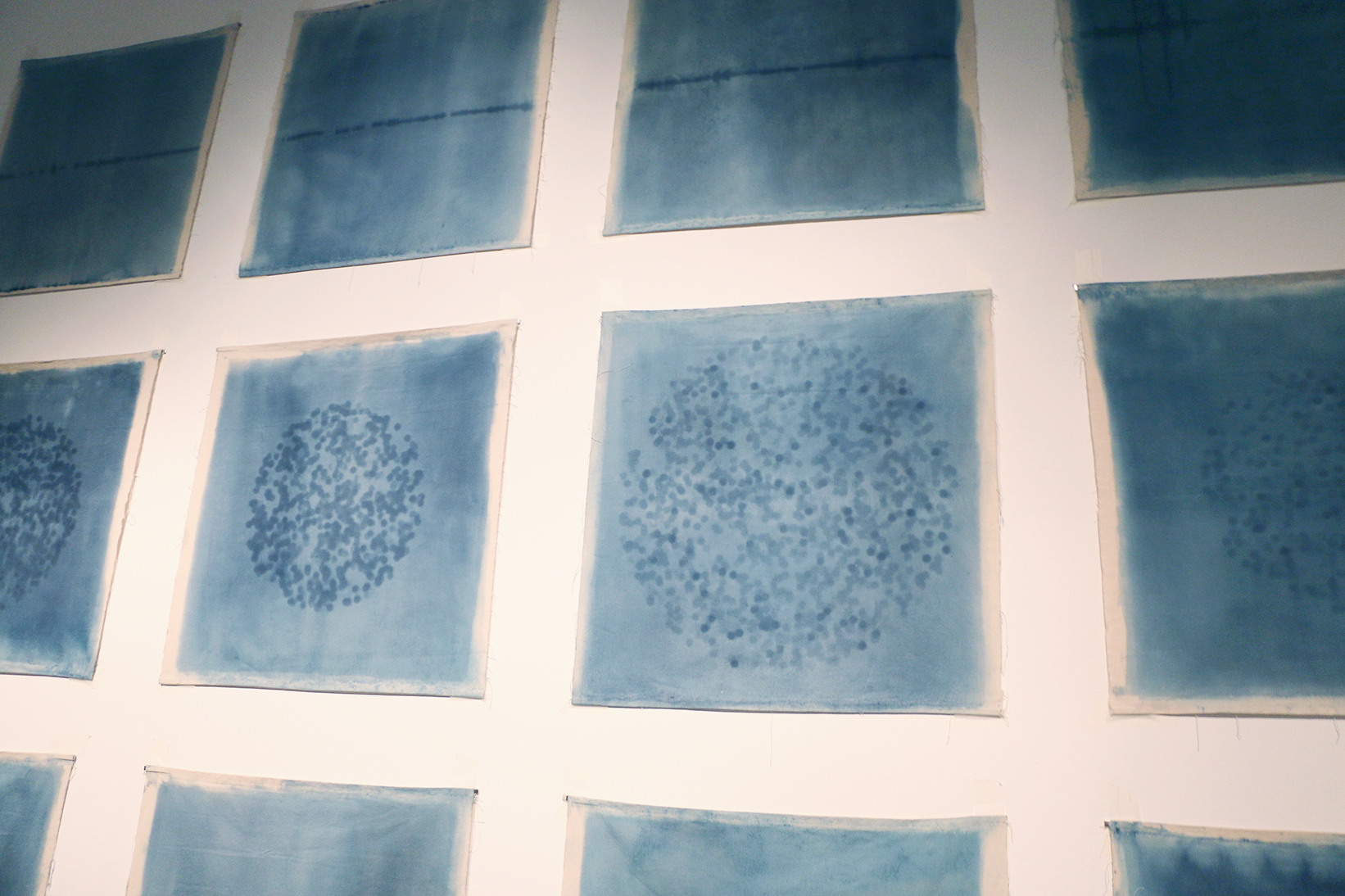
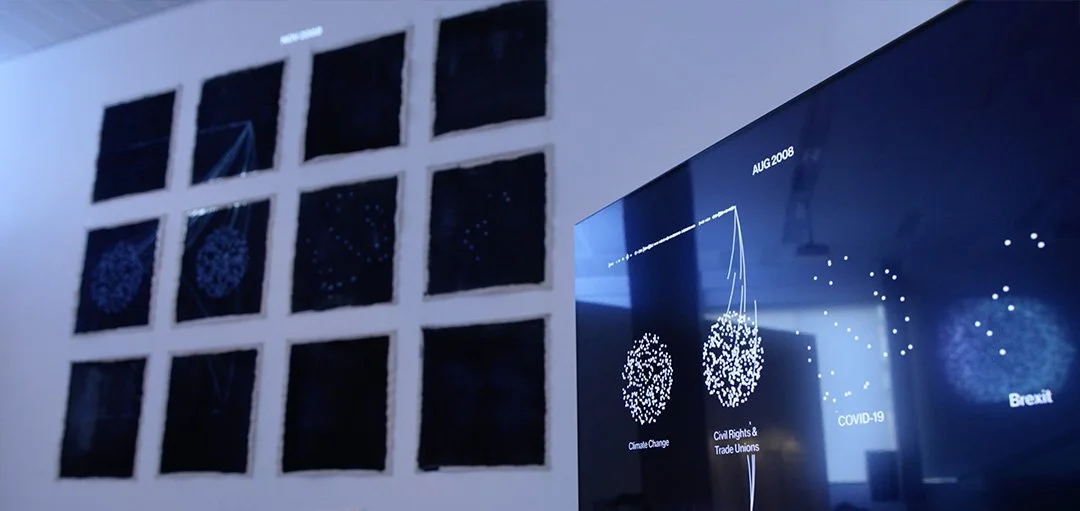
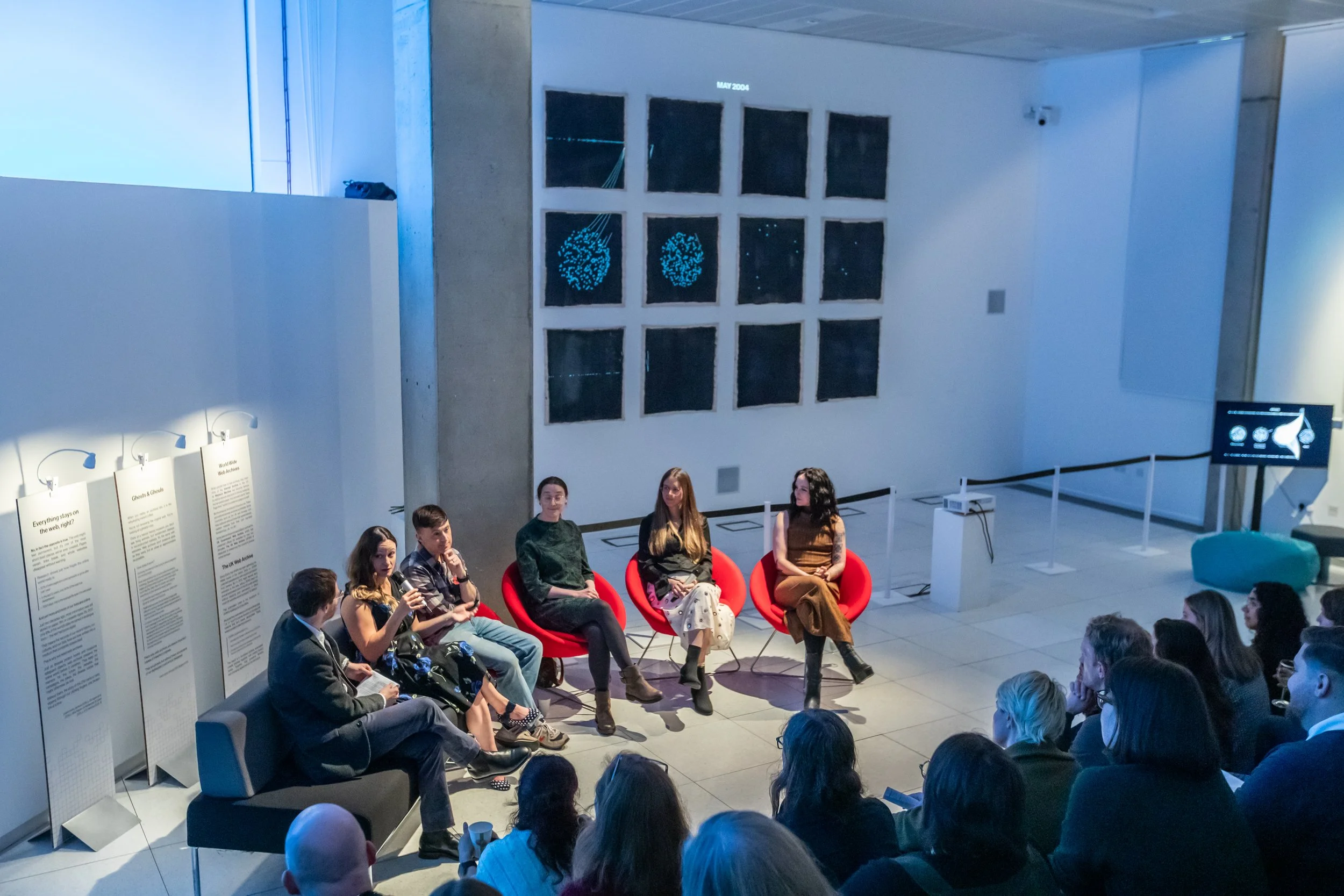
In this durational artwork, websites are transformed into flows of light whose duration and movement correspond to each site’s lifespan and subject matter. These luminous data flows are cast through a projector that gradually develops cyanotype prints on the adjacent wall. Over the course of 120 hours, running for five days, the cyanotypes slowly emerge within the gallery space. When the UV projection ends, the artists cure the prints, leaving behind fixed artefacts that stand as evidence of the act of exposure.
The video to the right shows each step of the process - coating the canvases, hanging them, building the visualization, projection mapping, exposing the prints, and finally curing and rehanging them in Inspace Gallery.
How the visualization works:
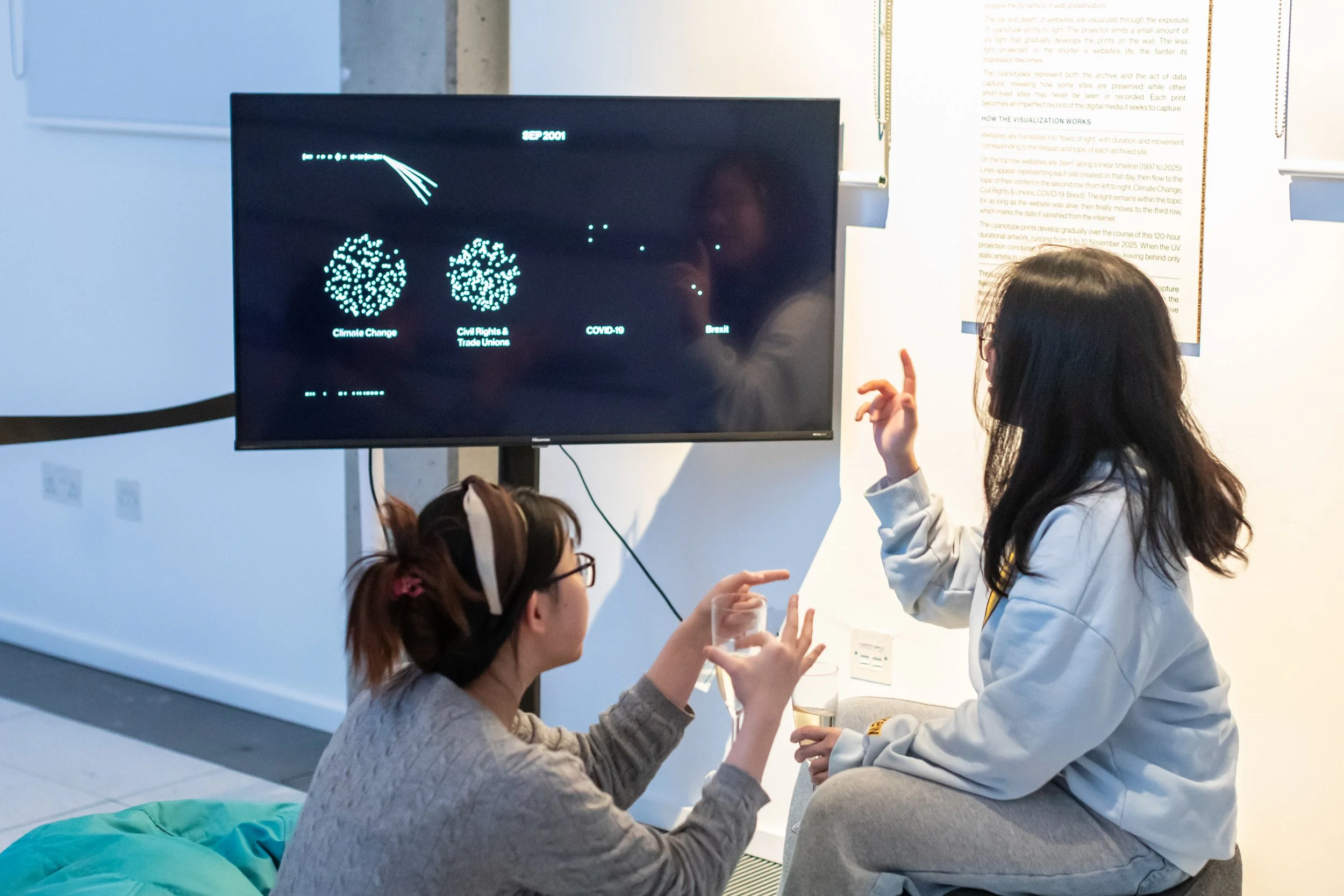
The top row presents a linear timeline from 1997 to 2025, where websites “appear” on the dates they were created. Each line of light then travels to the second row, aligning with the site’s thematic category (from left to right: Climate Change, Civil Rights & Unions, COVID-19, Brexit). The light dwells within that topic for as long as the website remained active before descending to the third row, which marks the date the site disappeared from the internet.
The less light projected—or the shorter a site’s lifespan—the fainter its impression becomes. The cyanotypes embody both the archive and the act of data capture, revealing how some sites are preserved while other short-lived sites may never be seen or recorded. Each print becomes an imperfect record of the digital media it seeks to capture.
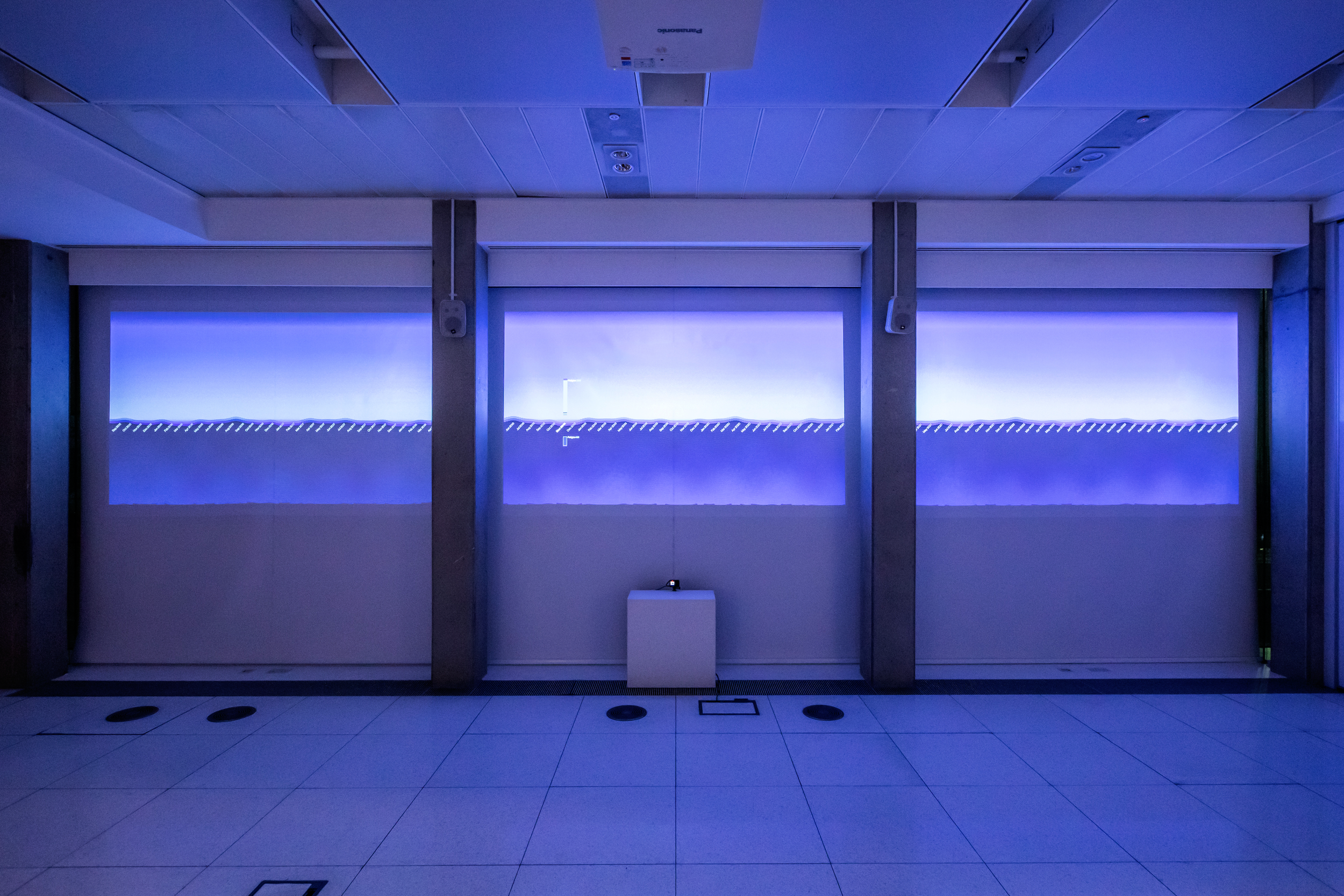
Through interactive visualizations, the exhibition further explores the complexities of missing and incomplete data, confronting the inherent imperfection of web archives and the ephemerality of web content.